
Blood Brothers

I was born into a world of whiteness: neighborhood, private school, and church; shuttled through that triplicate of colorless environs without wondering or questioning what other members of the human race might exist beyond those confines. At that time in my childhood my only exposure to other ethnic groups was when missionaries came to our church and gave slide-show presentations of their adventures in “seeking and saving the lost” in exotic places like Africa and Asia. It was the only time I ever heard my mother complain of our required attendance at church. “Lord, spare me from seeing another picture of a missionary posing with the indigenous people he’s baptized.” Such impiety from a worship leader’s wife. When I was nine years old we moved to Bloomington, Indiana for Dad to begin his doctoral pursuit in music at Indiana University. We lived there two years, and my world was turned upside down. It started with our new residence: a second-floor, two-bedroom in an old army barrack converted into a multi-unit dwelling for less affluent families who were attached to the University. The apartment manager told my parents that if the building ever caught fire to grab the kids and run because the unit would be consumed in flames in fourteen minutes. They didn’t question the manager’s knowledge of the exact account of time from ignition to consumption of our new abode, but for weeks after we moved in, Mother was constantly sniffing the air inside the apartment for the least hint of smoke. I now lived in a more colorful neighborhood among people from all over the country, yea verily, from all over the world who had come to pursue their academic studies. The cultural upheaval continued with my formal education. I now attended public school, Fairview Elementary, and with that came exposure to multi-national persons. I formed three close friendships that first year with a boy from Israel, one from Sweden, and a fellow American; a new type of American for me, an African-American, Raymond Brown. I felt an instant bond with Raymond probably because of the constant smile on his face that easily broke into laughter at the slightest provocation. Raymond looked at the world and found it humorous. Raymond had the natural ability to run like an Olympian sprinter. Teachers would organize races during P.E., and even in competitions with upper classmates, Raymond would leave all the other boys in the dust. Sometimes Raymond allowed the other competitors a half-second head start just to make it interesting…for him. I distinctly remember his laughter as he blew by me with such ease as if he had his own personal tailwind. I wanted to be fast like Raymond, but alas, that genetic makeup was not issued to me at birth. One day after coming inside from recess, Raymond and I still had some energy to burn and we began to scuffle. Isn’t that what boys do…scuffle? The teacher had yet to enter the classroom so we had no fear…


Comments Off on Blood Brothers

Solvitur Ambulando

I was sitting in the middle of church one recent Sunday, minding my own business, drifting in and out wakefulness, but at least I was in church. Mom and Dad would be proud and relieved. It must have been a moment in the sermon when I had drifted out because my ears suddenly pricked up when the preacher said, “Solvitur ambulando.” I thought the preacher had gone to swearing in Latin, but after he offered a quick explanation of the phrase (it is solved by walking), I was now awake. I don’t remember the sermon or the point the Latin phrase was to have illustrated, but as soon as the "Amen" was spoken, I went home and began to dig deeper into its meaning. The concept goes back to the Greeks philosophizing over the certainty of motion (Did any of these guys ever have a job?). Zeno posed the problem of whether or not motion was real, and Diogenes got up and walked out of the room. Offended by Diogenes’ rude exit, Zeno asked what he was doing, and Diogenes responded by saying he had just proved that motion was real. See what chaos ensues when one philosopher gets bored with another? Centuries later, St. Augustine of Hippo coined the expression into its Latin phrasing inferring that theological issues of the heart, soul, and mind are better “solved by walking” instead of yammering on about them. I have a distinct memory of one of my extended walks from the days of my youth. I was seventeen, and my mother and I were having an intense argument: the straight and narrow vs. the free spirit. I don’t remember the specifics of the disagreement—there were so many during my “angry young man” period—but the result was that I stormed out of the house with my mother on my heels, crying and pleading with me to come back. I kept walking. As I briskly made my way through the backyard looking for the quickest escape route, Mom’s pleading intensified, but to no avail. I spun around to tell her to just leave me alone and watched as she collapsed onto a wooden bench behind the garage, her face pinched-red and skin drenched in tears. This Madonna/Child drama might have inspired an artist's rendering of a divine moment, but did not, however, cause me to fall to my knees in repentance. I turned and kept walking. She did fire one parting shot: “Please don’t smoke while you’re gone.” As soon as I was out of sight, the cigarette pack and the lighter came out, and for the next several hours, I smoked nonstop. It was daylight when I left the house. It was dark when I got home…reeking of cigarette smoke. I may have smelled like a tobacco barn, but my anger had been “solved by walking,” at least this particular flareup of anger. There was still a deep well of rage and rebelliousness in reserve, and I’m sure my parents would have preferred…

Comments Off on Solvitur Ambulando
Read more about the article Not a Huntsman
Elmer Fudd

Not a Huntsman

After decades of living with Kay, I still want to impress and surprise her. Sometimes my efforts are rewarded with laughter and appreciation; other times, bewilderment, and still other times, the look if not the words of “I can’t believe you just did/said that.” Those are the times when honest effort becomes lame antics, and we males can be so good at lame antics. We are, if nothing else, consistent, and recently I tried to impress my wife with a skill that is not at the top of my bag of tricks. For the second summer in a row we have had a woodland varmint leave its natural habitat and go rogue taking up residence beneath our garden house creating all sorts of havoc. Word of the fate of the previous resident must not have made it out into the wilderness, and the current occupant must have found the perks of the domestic location too irresistible. We grew suspicious of this intruder when we noticed fresh trenches dug beneath the garden house and a well-worn trail leading to the tomato plants and then on to the section of flowers and ferns. One morning when I came out to pick tomatoes for breakfast, I caught him gorging on the ripe, red orbs. We had a verified sighting. He dashed beneath the garden house the moment we made eye contact. Strike One. A few days later when I returned from the gym, I went to the rain barrel to collect a bucket of water for the window boxes and noticed that our fountain was not working. I examined the pump and it was not malfunctioning. The breaker box inside the garden house had not tripped from a power surge. The electrical cord was plugged in and the power was on, so why wasn’t it working? I followed the cord from the outdoor outlet on the side of the garden house running to the fountain and found the spot where it had been chewed down to the copper wiring. I replaced the cord and informed Kay. Strike Two. When I suggested it was time to consider the .22 caliber option, Kay expressed her doubts. Her memory was long, stretching back to last summer’s fiasco and our weekend guests having to endure the vile stench of varmint decay wafting from beneath the garden house. She reminded me that her brother Larry, a veteran of the woods and hunting, had said that groundhogs were tough critters and the only way to dispatch said critter was a well-aimed, direct shot that would drop the varmint in its tracks. This was her sweet but not-so-subtle way of telling me that I might not be up to this task, and she did not want a repeat of last year’s debacle with a yard full of revelers inhaling the toxic air around our garden house. Duly noted. A brief time passed with no sightings, and we thought that the intruder had moved on, but while weeding one day behind…

Comments Off on Not a Huntsman

Aging Rocker

No, this story is not about an old-fashioned rocking chair Kay and I found in some small town antique shop. It is about my short-lived career as a rock ‘n roll star that began in a literal cave and ended when I found myself sitting on a picnic table between Robert Plant and Jimmy Page backstage of Municipal Auditorium during John Bonham’s drum solo. Have I gotten your attention? Coming of age in the 1960’s, I had fantasies of being a rock star. I would bounce around in my bedroom in front of the mirror to The Who, or Jimi Hendrix, or The Rolling Stones, or (my secret confession), Paul Revere and the Raiders, playing these amazing licks on my father’s old tennis racket I used for a guitar. And I would visualize a sea of fans screaming their lungs out for me as they stormed the stage. The memory of how our band came together is fuzzy. I was invited by Larry and Kenny Keaton to be the lead singer in this band. We were high school friends and they were excellent musicians. They played actual guitars, ones that required tuning, amplification, and skill. A drummer was added, and voila: a rock band was formed. The Keaton Brother’s decision to include me should have been questioned, but what I lacked in vocal ability, I made up in enthusiasm. I could belt a song, though perfect pitch was elusive, and I could dance. My religious upbringing frowned on such terpsichorean talent (Terpsichore, the Greek Muse of Dance), but I was not thinking of religion at the time, only the chance to create some rock ‘n roll. I had the moves if not quite the vocal chops. We practiced way more than the offers to perform warranted. I remember a few basement parties, a middle-school hayride, and one pep rally. Talent scouts were noticeably absent. Our big moment came at a Battle of the Bands contest at Ruskin Cave in Dickson, Tennessee. The area was home to a late 19th century Utopian colony named for the English socialist writer, John Ruskin. The group had a short-lived existence, but the interior of the cave was the perfect place to set up a cannery operation for the Ruskin Colony. Like most utopias, they had a handful of active years before fizzling out. But that history was of little interest to me. I was only thinking of making rock ‘n roll history, inside a massive cave, no less. No audition was required. You just showed up and signed up. Each band was given ten minutes to perform. There were covers of “Satisfaction” and “Light My Fire;” all fine songs, but by the tenth time of hearing it, all musical innovation had dissipated. No one was doing soul or funk, and we had worked up a killer version of “Shotgun,” by Jr. Walker & the All Stars. Even though we lacked a sax player, those Keaton Brothers could play a mean guitar and our drummer…

Comments Off on Aging Rocker

The Nymphs of Plenty

My sister, Nan Gurley, met the man-of-her-dreams when they were attending Abilene University back in the mid-1970’s. In the spring of her senior year, Nan starred in a production of “Man of La Mancha” in the role of Aldonza. The man-of-her-dreams played Quixote. Several in the family went down to the university to see the production. I was properly impressed with the man-of-her-dreams. He held his own opposite a formidable costar. In the course of my brief trip, Nan told me that she thought she might be in love with this guy. I reported this to our younger brothers when I returned home. And when the man-of-her-dreams decided he would move to Nashville after graduation to pursue his career in journalism and took the post of managing-editor at the Nashville Magazine, my brothers and I knew this “love” was now a two-way street. The summer of 1975 Nan and I were working at Opryland. I was about to head off to UNC Chapel Hill to begin my two-year MFA program in theater, so that summer it was a full house at the Arnold homestead. Just because Nan proclaimed that she was in love with the man-of-her-dreams, it did not mean that said object of her affection was going to automatically get a free embrace from her brothers. The male siblings had a stake in this love thing too. Now it was not as if we were plotters and schemers engaged in undermining the prospective union, but it had to be tested. Nan was wise enough not to give out regular installments on the progress of her relationship with the man-of-her-dreams to her three brothers. But when an engagement ring appeared on our sister’s finger, we knew this was proof-positive and action had to be taken. One morning Mom and Dad hosted a breakfast on the back patio with Nan and the man-of-her-dreams to discuss wedding plans. The three brothers were not invited. This rebuff would not stand. As the parents, our sister, and the man-of-her-dreams breakfasted on the back patio, my brothers and I spied upon them from the second-floor bathroom window. That was when inspiration descended from above in the form of Cupid who whispered into our ears, “Thou shalt strip down to thy boxers and prance around the breakfast table shooting arrows of love into the hearts of the amorous couple.” Who were we to disobey Cupid’s call? So we disrobed down to our boxers, went out the side door, and came prancing around the corner of the house chortling falsetto musical chants of love like a cupid chorus and miming the drawn bows releasing arrows from our quivers and into the hearts of the engaged couple. Our sister and the parents failed to see the humor. Nan started throwing ice cubes from her tea glass, and the parents exclaimed in horror at their semi-naked sons ordering us to make an immediate exit. But the man-of-her-dreams laughed. He laughed. This was a good sign. Could he, in fact,…

Comments Off on The Nymphs of Plenty
Read more about the article Son of a Teenage Runaway
Henry O. "Buddy" Arnold II

Son of a Teenage Runaway

How does a father teach a son to be a man? What is it to even be a man…to be a father…to be a son? In 1944, Dad ran away from home at the age of seventeen, hitchhiked from Richmond, Virginia all the way to Ft. Lauderdale, spent a few nights on a park bench, lied about his age to the Army recruiting officer, worked as a bellhop in a swanky hotel until he was inducted into the Army. Somewhere in that time-frame between bellhop and paratrooper, Dad called his parents and told them what he had done. In part, it was his parent’s fault. Sunday after Sunday, “solider-boys” home on leave were invited to lunch after church at my grandparent’s table. The stories these young men told of war and honor inspired my young father’s imagination. After basic training Dad was shipped off to the Philippines to fight. The process of “Know Thyself” began before Dad ran away from home. He had suffered a few blackout spells as a kid, and the doctor had cautioned against overexertion. He could have had a medical deferment for his unreliable heart, that fact, plus being an only child, would have kept him out of the military, but then Dad would never have had his personal odyssey, an adventure he pondered for some time. He had run away in his mind long before he slipped out the door when his parents weren’t looking. My father understood who he was and dreamed of what he might become, then made the bold choice to defy his overprotective father and mother. I ran away from home a few times myself, but it was because I was being a selfish jerk, not for such a grand reason as serving in a World War. I lied to my parents often, but ten times out of ten, it was to keep from getting caught in some misbehavior. The nobility gene had failed to pass from my father to his firstborn son. I know Dad often looked at me and wondered what he had spawned. But that is the way of fathers…to look upon their offspring and wonder…to wonder at many things. I remember an early point of wonder at my father when I was a child of seven or so. In the basement of my grandparent’s pre-Civil War house in Richmond, my grand mother had set up her one-woman seamstress shop. Her skill at designing and creating women’s clothing helped the family survive the Depression. The steps down to the basement were off of the kitchen. I was in the kitchen and could hear a heated conversation coming from below. It was my father’s voice arguing with his parents. I don’t think I had ever heard this type of verbal exchange between them, and it frightened me. But instead of dashing away, I slipped quietly down the basement steps to eavesdrop. The gist of the argument was the inequality of the black and white races. Dad’s parents were committed…

Comments Off on Son of a Teenage Runaway

Mr. Washington Goes to the Theater

I came across an article in The New Yorker recently by Adam Gopnik in which he reviews some new historical works that rethink the American Revolution. While the article was illuminating, it was his last two paragraphs that caught my attention. He recounts an action taken by George Washington to stay the execution of Charles Asgill (an execution Washington had ordered) in November of 1782. The nineteen-year-old Asgill was a captain in the British army and had been captured and held in a prisoner of war camp in Lancaster, Pennsylvania. Some months before British Loyalists had executed a captain in the Continental Army in retaliation for the death of a Loyalist soldier. The game of tit-for-tat had begun, and pressure mounted on Washington to hang a prisoner of the equal rank of captain. Asgill was one of twelve captains held in captivity at that camp in Lancaster. No captain stood out as particularly heinous, which would have made the selection process much easier. So twelve slips of paper were tossed into a hat and passed around the group. When Asgill withdrew his slip, it read “unfortunate.” Unfortunate indeed. An intense letter writing campaign ensued to spare the captain, led by Asgill’s mother, which inspired the French Foreign Minister to solicit on the captain’s behalf. Washington was looking for any reason to stay Asgill’s execution and these letters of a mother moved him to persuade Congress to spare the young man’s life. There are other fascinating details to this story, but this incident inspired a French artist and writer to write a play based on Washington’s intercession. Jean Luois Le Barbier sent a copy of his play to Washington with this note, “I hope, Sir, you will not disapprove of my zeal in publishing your sublime virtues in my performance.” What a beautiful example of art imitating life, and if that were not enough, Gopnik refers to Washington as a “lifelong theater enthusiast.” This I did not know, so my curiosity was peaked, and I went on the hunt for evidence that our first president was a theater patron. Washington recorded detailed entries in his diaries commenting on his frequent attendance at theaters in Williamsburg, Philadelphia, New York, and Alexandria, Virginia to see productions by professional acting troupes. Washington had favorite actors he followed and was known to attend a production he liked more than once. According to Odai Johnson in his book, “Jefferson and The Colonial American Stage,” Thomas Jefferson and Washington attended the same theatrical performance on eight occasions. It is not a stretch then to imagine our Founding Fathers being moved by productions of “Hamlet,” Robinson Crusoe,” and “Don Juan,” or laughing themselves silly when viewing “The Romp, or A Cure for the Spleen,” “High Life Below the Stairs,” and “Animal Magnetism.” You have to love the titles of these comedies. But all was not well for the theatrical arts in those early days of our nation. In an article in the “Journal of the American Revolution,” David…

Comments Off on Mr. Washington Goes to the Theater
Read more about the article A Mother’s Crown Jewels
Crown Jewels of England

A Mother’s Crown Jewels

The Arnold kids were never given financial allowances growing up. My parents did not have that kind of disposable income. If we wanted to have spending money we needed to make it. So at the age of ten how I came by the exorbitant sum of a few dollars to purchase the blue-beaded necklace for my mother on Mother’s Day was probably from scouring parking lots and playgrounds for lost change. Our family had relocated to Bloomington, Indiana so Dad could get his doctorate in choral music at Indiana University. We lived in old Army barracks converted into housing for those students attending the University with their families. There were eight two-bedroom apartments, and the landlord warned emphatically that should a building catch fire, “Just grab your kids and run, because the whole place will be up in flames in fourteen minutes.” I'm not sure how he knew that fact, but for that two-year residency, our noses were always on the alert for the smell of smoke. The purchase of this necklace was the first time I was proactive in getting something for my mother without the aid and support of my father. With my pockets stuffed with coins, I peddled my bicycle over the railroad tracks behind our apartment building to a little shopping area where the store was located (a five-and-dime, not a Jared), and returned a successful “hunter/gatherer” with my prize in a paper sack. Mom wore it proudly to church that Mother’s Day Sunday, and countless other times. I was told often that this necklace was the favorite piece of jewelry in her collection, and for a time I believed that my offering trumped her wedding rings, fake pearl ensembles, and broaches embedded with imitation gems. When Mom died in 2015, my sister, Nan, was in charge of dispersing Mom’s jewelry collection, and the first thing she located was the blue necklace and returned it to the “giver.” Presenting Mom with the necklace that Mother’s Day brought tears to her eyes, a reaction I continued to induce for years to come though rarely for such sentimental reasons. Isn’t that what sons are supposed to do to their mothers? Make them cry often? If so, I kept pace with the average and most likely exceeded the allotment of times a son is supposed to make his mother cry. Those weepy occasions began to taper off when I married Kay. I think Mom’s quote to my bride on our wedding day was something to the effect of, “I’m handing him off to you. I did the best I could.” In the long march to my wedding day, before the “handing off,” Mom said that she had long ago given up praying that I would have good friends or get through high school and then college or just go to church once in a while. She finally resorted to begging God to just keep me alive…at least until she could find someone else to take over. I know, poor…

Comments Off on A Mother’s Crown Jewels

Maniac on Duty

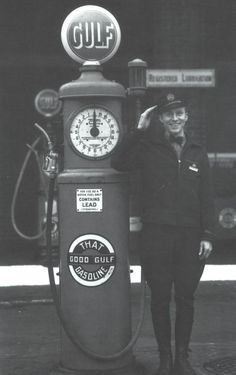
Back in the day when gas stations were “service” stations, when the attendants wore uniforms tricked out with caps and bow ties ambling out of their small office areas, which sold everything from auto parts to cigarettes and beverages to cholesterol-clogging snacks, usually wearing a smile, and if the driver were a patron, offering a congenial greeting to the Mr. or Mrs., you were confident that you and your automobile was in good hands. If the attendant was above average, he might even remember the names of the patron’s kids. After inserting the nozzle into the tank and turning on the gas flow the pleasant attendant would ask, “Check that oil for you, Mr. Arnold?” Like the “Greatest Generation,” soon there will be no one left alive who will remember having been asked that question. And while the whoosh of gas flowed through the pump and into the tank of your car (I loved the smell of gas fumes escaping into the atmosphere, which might explain my cognitive issues), the wipers were looked over, the tire pressure was gauged, the windshield was cleaned, the oil level on the dipstick examined--topped off or a quart added if necessary--the spark plugs wiped of crud, and the radiator fluid level checked. By the time these standard services were complete, the tank had been filled. In those days a long black cord ran from the pumping station island, along the pavement, and into the office area that set off a loud clanging bell every time a car ran over it alerting the attendant that a customer had arrived. I thought it was loads of fun to bounce up and down on the cord making the bell go on and off with repeated jumping. You want to see a cheery station attendant turn instantly surly just get caught hopping on the black cord. My parents were not loyal to a brand of gasoline. Tiger tails, Dinosaurs, Fire Chief Hats, and even the winged Pegasus did not lure us into their stations unless the red needle was bumping against the “E” and there were too many miles between us and our preferred station. My parents would scrape together their loose change, just enough coins to purchase the fuel needed to get us back to our station for a proper fill-up. In the 1950’s gasoline averaged between 18 and 23 cents per gallon. Most service stations, ours included, had one or two service bays with mechanical doors that opened and closed automatically. I watched in wonder as the doors would rise into the ceiling seemingly without human effort as if Ali Baba had spoken the magic words, “Open Sesame.” Once the vehicle was inside the bay, the door would lower itself back to the ground concealing all the mysteries inside its asylum. Yes, asylum, for my nascent literary skills were soon to be tested and found woefully inadequate. When I began to develop the aptitude to identify letters, recognize written vocabulary, and understand how a succession of…

Comments Off on Maniac on Duty

The Dark Side of Inspector Clouseau

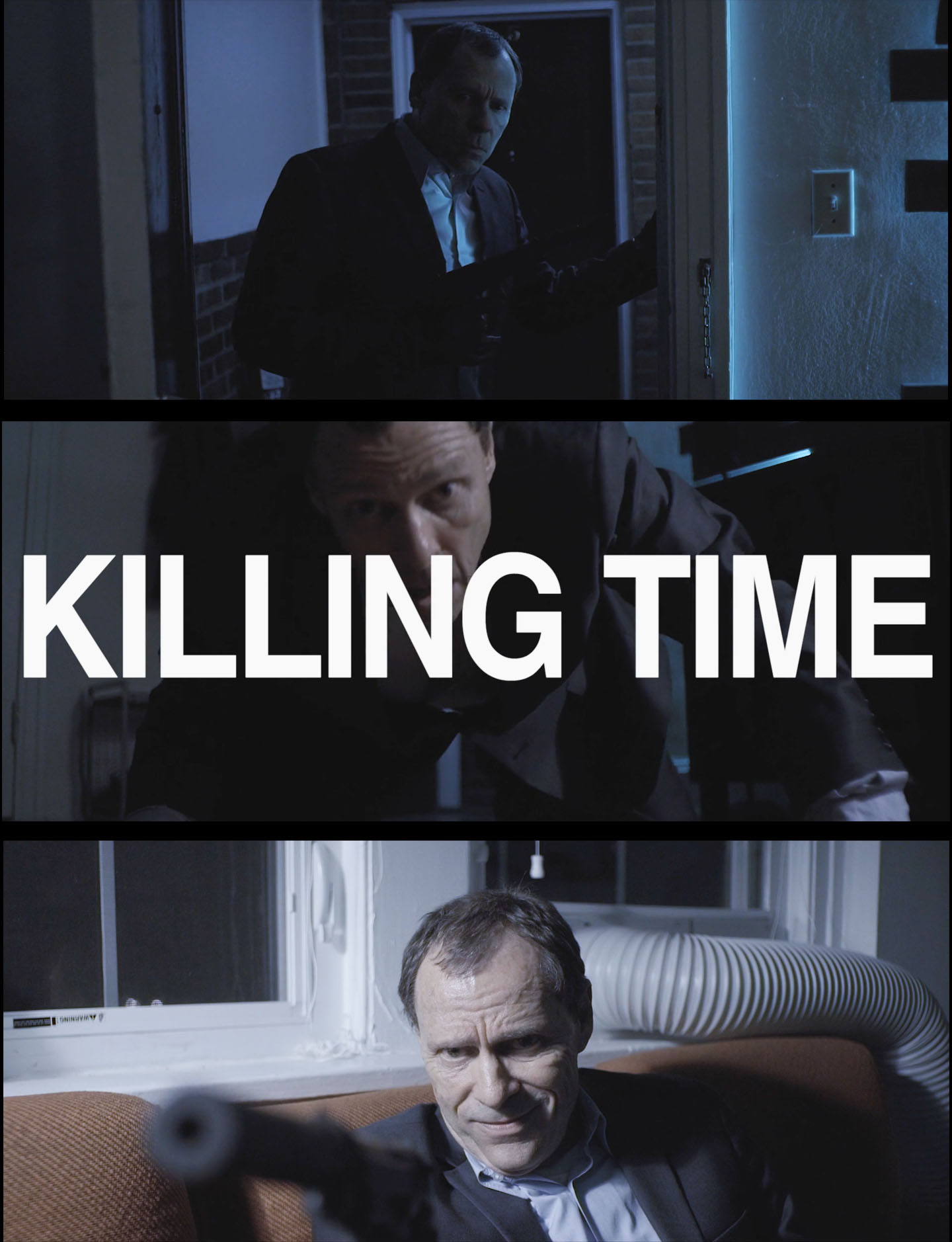
If you are squinting at this split-screen, poster image of a man with a weapon bearing expressions from quizzical to surprise to menacing and wondering “could that be?” then let me confirm either your weak eyesight or questioning mind or both. It is I, a gun in my black-gloved hand. And so let the Jimi Hendrix tune “Hey Joe” play in your mind, “Hey Joe, where you goin’ with that gun in your hand?” Now I do not find myself wielding a weapon very often. We live on the property that has been in Kay’s family for over one hundred years. After living in a condominium in Los Angeles for several years with a postage stamp for a back yard, it was great to have acres and acres of farm land out our back door. And part of the fun of having access to such open territory is the opportunity to have target practice with a variety of weaponry. When the mood strikes, we will gather up a collection of empty cans of Kay’s Big Sexy Hair or TRESemme spray or my Barbasol shaving cream or a box of clay pigeons and the skeet launcher, go back on the farm, and commence to shooting. When our daughters went off to college in Philadelphia they would bring their northern friends home and expose them to the pleasures of country life. It did not take long for word to spread on campus before caravans of cars packed with the girl’s friends would arrive for a Thanksgiving holiday or a spring break. The Florida beaches had fewer revelers during those years; hard to compete with bonfires and cookouts, four-wheel drive trucks and dirt bikes, a well-stocked pond with a dock, our makeshift firing range for target shooting, two racks from which to choose a pipe for smoking a variety of tobaccos (all participates of age and all substances legal), and lots of love. I am a fair shot although not as good as Kay, who even as a young girl, upstaged an older neighbor and his friend who kept firing and missing a rascally rabbit romping through our back field. She requested to take a shot, which was met with disdain by the males until she fired the .22 rifle. Her status as a one-shot wonder became legend, and she replaced Mr. McGregor as Peter Rabbit’s worst nightmare. Last summer we were hosting a large, all-day gathering at the house. We even splurged and rented an inflatable water-slide. We set up the fifteen-foot beast next to our garden house so we could power the electric generator which ran nonstop keeping the air pumping into the slippery monster so our guests, ranging in age from 3 to 70, could wear themselves out climbing and sliding…repeat ad infinitum. For weeks leading up to this day I had noticed a groundhog coming from beneath the garden house. He would raid my garden or forage the pears that had fallen to the ground from a nearby tree.…

Comments Off on The Dark Side of Inspector Clouseau