James Bond Wannabe

It came as a terrible disappointment the day I realized I would never become James Bond. Like most boys growing up, I went through a long list of potential careers. In the early days of my childhood I was influenced by the characters I saw on television; the standard cowboy, soldier, and adventurer types. None of these stayed with me for long. I was attached to one superhero for awhile. I believed then and do now that Superman was the best of a whole slew of superheroes. Too many superheroes had specialized powers that required a team of "experts" to take down the bad guys, or someone like Batman who was dependant on technology. With my limited techno skills, I would never make it out of the bat cave. Superman was an all-inclusive power machine. He required no technology and did not have to summon a gang of one-trick wonders to help him vanquish the bad guys. As long as he avoided the kryptonite and did not get entangled with Lois Lane, he could save the world whenever duty called. My parents did not have disposable income to purchase my own Superman costume sold in the five-and-dime stores. So before my resourceful mother sent me outside to rid the world of crime, she pulled an old blue shirt of my father’s and a worn towel out of the rag-bag under the kitchen sink, painted a red “S” on the front of the shirt, and attached the towel-cape to my shoulders with duck-head diaper pins borrowed from the stash stored on the shelf next to the crib of my much younger sibling. One must dress for the role, and my mother’s creative inspiration helped me convert discarded materials used to mop floors and wash cars into an outfit worthy of a superhero.     I completely believed my mother’s magic to transform me. I could leap tall buildings, outrun speeding bullets, and display impressive feats of strength. And I tested this theory against the laws of nature. I would leap from the roof of our garage or the ledge of our tree house or fling myself from the tire-swing once it reached the apex of its back-and-forth. I loved hearing my cape flapping in the wind. Everything was going great and I was keeping the neighborhood crime-free until one day when I almost hung myself by my cape. I was in pursuit of two scoundrels (neighborhood friends who drew the lot of “bad guy” in our after-school, make-believe play time), who dashed into a hedge separating one backyard from another. I chose to leap the hedge assuming their intention was to come out on the other side. If my timing was right, I would fly over the hedge and crash land on top of them just as they emerged. In mid-flight I realized I had miscalculated the cunning of my foes. They had chosen to remain inside the thick hedge and escape by retracing their steps once I plopped down on the…
Comments Off on James Bond Wannabe

Beware of First-Hand Ideas

“People never touched one another. The custom had become obsolete, owing to the Machine.” E. M. Forster In my eclectic reading habits I frequently stumble upon subjects and stories that surprise me. I love to be surprised. I was reading an essay in The New Yorker that referenced a short story by E. M. Forster entitled “The Machine Stops.” Yes, that Forster of “A Room with a View” and “A Passage to India” fame. My initial surprise came when I read that Forster’s short story was first published in the Oxford and Cambridge Review in November of 1909. “The Machine Stops” is a futuristic tale. It might fall into the science-fiction or fantasy genre in today’s publishing pigeon-hole mentality. There are only two characters: a mother, Vashti, and her son, Kuno. By decree of the invisible Central Committee who had designed and set in motion this omnipotent and omnipresent Machine, all babies were put into public nurseries. “Parent’s duties,” said the Book of the Machine, “cease at the moment of birth.” Vashti could visit Kuno in the nursery until the Machine assigned him a room on the other side of the earth. After that the only means of communication was through electronic telephones with plate screens. The populations of the earth lived underground in elaborate honeycomb system with individuals housed in small, hexagonal rooms. Every need was met inside the room. Few ventured to the “surface of the earth” except for a rare flight on an airship with the sky windows concealed by blinds of pliable metal. “When the airships had been built, the desire to look direct at things still lingered in the world,” writes Forster. But over time the “civilized and refined” found it discomforting to view natural sights such mountains, oceans, woodlands, night and day, stars and planets. At the beginning of the story Kuno has called his mother from the southern hemisphere and asked her to take a flight to the northern hemisphere so he could tell her something important. The idea of flying in an airship was frightening enough to Vashti, but it was even more terrifying to speak to someone in person, even her son. The advance technology of this brave new world had made face-to-face contact obsolete. “It is contrary to the spirit of the age,” Vashti asserted, and Kuno countered that human contact was “contrary to the Machine.” Public gatherings were abandoned for the insular convenience of multi-technical connections with audiences through screens. Knowledge was passed through lectures on screens from lectors who gathered their information from other lectors who had sourced their learning from the Machine’s book of knowledge. No personal experience was required in the gaining of knowledge. “Vashti was seized with the terrors of direct experience,” Forster writes. The communication systems, the illumination, the food and drink, the temperature of the filtered air, all requirements to sustain human life in one’s personally-designed abode was provided by the Machine and its Central Committee. And whenever Vashti was compelled to worship…

Comments Off on Beware of First-Hand Ideas

A Bear-Time Story

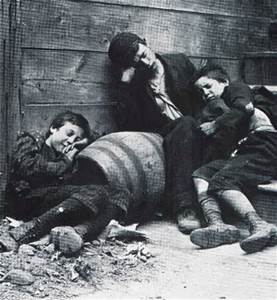
Kay and I homeschooled our daughters. I should qualify that statement by saying I was more the sub. Kay had the lion share of the responsibility for the girl's education. My contributions were more in line with artistic field trips: museums, galleries, dance recitals, concerts, theatre (a lot of theatre). I usually was the one who took them to these performances and got them prepped to have a deeper experience with the art form. Kristin went all the way through her senior year as a homeschool student. Lauren decided she wanted more athletic activities and social interaction, and at the beginning of her freshman year we enrolled her in the local high school. Not all of the homeschool field trips were of an artistic nature. Some were inspired by life experience. I think the girls started the conversation about potential causes for homelessness as we would drive through Nashville and see homeless people wandering the streets. The curious and impressionable natures of our then ten and eight-year-old daughters could not fathom why people would choose to live in such a fashion. I know whatever feeble explanation for the plight of homelessness I tried to articulate did not satisfy them, so I suggested that we just try and get to know some of those folks. We chose a soft approach in our initial attempt to connect with this unique population, which was to make sack lunches, drive through downtown and find random individuals, then stop to offer them a pbj and then hope to engage them in conversation. Over time these field trips led us to a man nicknamed “Bear” who lived in a two-room shack under the bridge over the Cumberland River and within a few feet of the busy railroad tracks. This was a time when there were make-shift tent-villages set up by the homeless population in that part of town. These encampments would eventually be cleared out to make way for the construction of a football stadium. Bear got his nickname for obvious reasons; he was hairy in the extreme. Face, arms, chest, head were a thick covering of dark hair with streaks of gray and grime. He was the unofficial mayor of this homeless enclave, and we soon realized that if we brought supplies to him, he would equitably distribute the items among the people. By association with Bear, we were more acceptable to the homeless citizens that would drop by Bear's home. Bear’s small domicile was made of plywood and palates, tar paper, shingles, and tin, all scrapes he had gathered on his scavenger hunts. He had grown up in a satellite city not far from Nashville and had chosen a homeless lifestyle over the traditional familial one. We did not pry for more specific reasons for his current living situation. What we appreciated was his expansive personality that was warm and inclusive, and how he approached his responsibility as “mayor” like that of a mother hen extending her protective wing to gather the needy beneath it.…

Comments Off on A Bear-Time Story
Read more about the article Don’t Touch Me
Barry as J.J. and Chip as Mark outside the Cathedral.

Don’t Touch Me

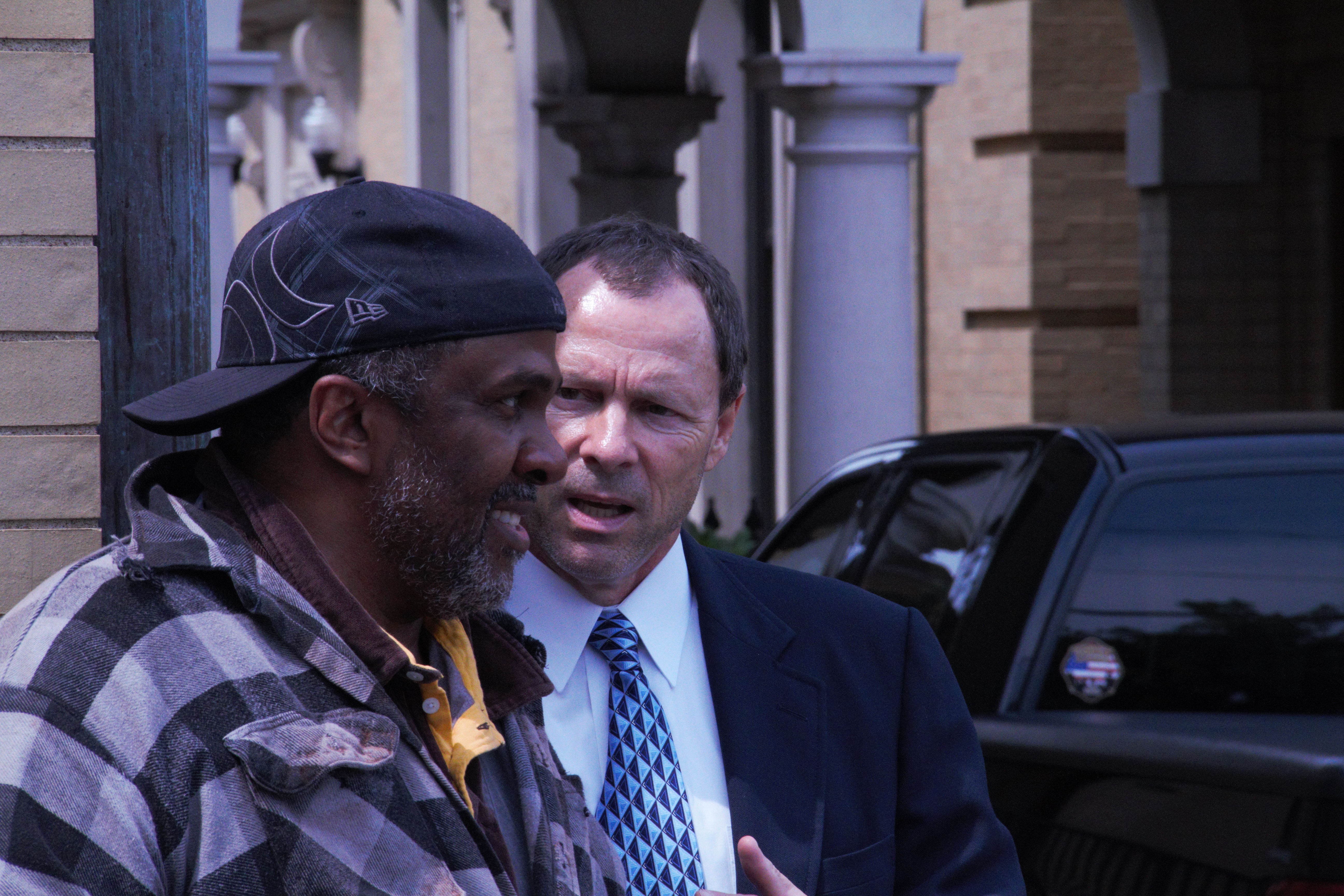
A little game my three siblings and I played as kids was poking one another with a finger and then running away as fast as possible. We hated it when one of us got poked by the other…a fear of the transference of cooties perhaps. The victim would complain to the parent within earshot that so-in-so “touched me.” If a threat was even perceived by an approaching sibling the immediate response was DON’T TOUCH ME! And back in the day when there were no seatbelts, when we got into the car to go anywhere, we would draw invisible lines across the backseat and threaten the offender with mayhem should they cross said line and touch the other. Today we can’t hug each other enough. A few years ago I was asked to perform a one-man show I had developed from the Gospel of St. John, similar to what British actor Alec McCowen had done with the Gospel of St. Mark, for a chapel service at the Nashville Rescue Mission, an organization devoted to serve Nashville’s homeless population. I had agreed to do the performance months in advance, but when it came time, I regretted having said yes, and found myself struggling to summon any enthusiasm. I was tired. I was unmotivated. On the drive to the Mission, I toyed with a number of creative excuses I could use to get out of it at the last minute without just pulling a no-show. I even grumbled to God, ending the conversation with, “I’ll go through with it, but I don’t have to like it.” If I was hoping my little complaint might invoke a divine change of heart, it was not in evidence when I got out of the car and entered the building, or went through the sound and light check, or faked half-hearted interest in the chaplain’s sincere attempt at conversation, or watched as the six-hundred seat auditorium filled to capacity. Some level of joy began to seep in as I performed the play, but it was hampered by the constant wheezing and coughing and sneezing and yes, snoring, that echoed in the room during the presentation. It was like audible sounds of diseases cavorting and cultivating in a giant Petri dish. I appreciated the occasional interjection of laughter at a humorous moment and the enthusiastic applause at the end, but it was not enough to help me overcome my initial resistance. This was not the traditional theatrical venue to which I was accustomed, and after the performance the chaplain asked if anyone wanted prayer. So many men came forward that he asked for more staff to help with the penitents. The brokenness displayed by those who came forward began to dissolve the crust around my heart…a little. Then came a surprise. The chaplain announced that if any of the men would like to greet me that I was happy to meet them. Whoa there, partner, I thought. I’m an actor not a minister. I like that aesthetic distance…

Comments Off on Don’t Touch Me

Our Friend Sue

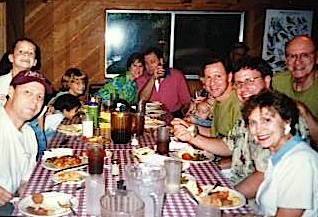
Growing up in the Bud and Bernie Arnold household we practiced certain rules that helped stem the tide of chaos and kept certain rituals that over time grounded and centered us giving us a sense of our place in this world. One such regulation/ritual was the dinner hour. Regardless how the day went for the individuals in the family, sitting down to break bread together at six p.m. was a precedent we maintained at all cost, and within that auspicious span of time, our raw humanity was illuminated. It would be safe to say that over the years, thousands of people have sat at the Arnold table and each guest was honored by my parents if not always by their children. Missionaries, actors, teachers, journalists, writers, preachers, freeloaders, boarders, artists, strangers, students, politicians, all racial stripes, all gender stripes, rich, poor, ex-cons, addicts, alcoholics, the terminally ill, the greatest of these and the least of these (a guest list that would rival the Queen); if you were at the house at the dinner hour, invited or uninvited, a plate was set for you at the table and a bed was made if you needed a place to sleep. There were guests who stayed for a few nights or a few weeks and sometimes to infinity and beyond. The weirdest guests I remember was a marginal friend of mine from my college days who brought his new bride to Nashville for their honeymoon and was too broke to afford a hotel so they stayed in my sister’s room upstairs. She was still away at school so no one had to be displaced from their rooms. The newlyweds were very quiet. My brothers and I could only imagine what was going on. The couple was invited to our evening meals, and my friend accepted a few times, but the bride never made an appearance. He took her meals up to their room. How romantic we thought, but no; the romance seemed to be missing like the bride herself for we never laid eyes on her after their initial arrival. They never went anywhere during their stay. On occasion, my friend would apologetically walk through the house offering as an explanation the need to fetch something for the bride. After several days of this absurdist drama, the couple slipped away while we all were conveniently absent, and within a few weeks, we got word that their marriage had been annulled. That explained the silence in the next room. As it has been said, you will never realize how peculiar your friends are until you start to describe them to someone else. To gather around the Arnold dinner table was always a mixture of the sacred and the profane. It was rarely a Rockwell painting. However, my parents, Dad in particular, did their best to elevate conversation and not stoop to the discourse and behavior of their offspring, especially in the presence of company. But sometimes they could not avoid being dragged down into…

Comments Off on Our Friend Sue

The Trouble With Icons

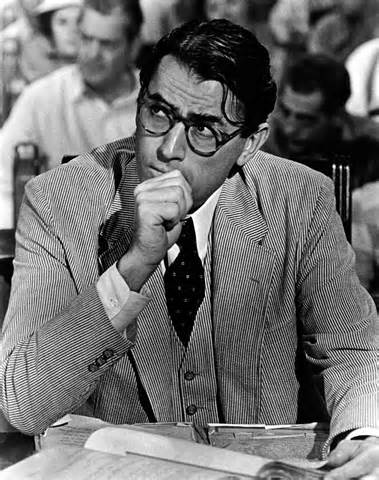
Let me start with a disclaimer: I have not read Harper Lee’s, “Go Set a Watchman.” I have every intention of reading it but will probably let the brouhaha die down before I crack the spine of my copy. I did not read “To Kill a Mockingbird” until I was an adult. I did not read much of anything until I was an adult. I was and am a very slow reader; my dyslexic nemesis sits atop my head and loves to trip my brain with linguistic landmines. I do not remember when I read “To Kill a Mockingbird” for the first time, but I do know when I read it the second time. In the spring of 2010, I had gone through a rigorous audition process for the role of Atticus in a play adaptation of the novel that Nashville Repertory Theatre would produce in the Fall. Rene Copeland, the artistic director of Nashville Repertory Theatre had pared the “Atticuses” down to nine, or so, for the final callback. It was an embarrassment of riches for Rene, and she could have cast any of the actors for the role. Several weeks later I happened to be at a theatre event that Rene was also attending. She asked if I had read the novel before the audition. I confessed I had not, and she said something to the effect of, “Well, you’d better get on it, because I want you to play Atticus.” I excused myself to go outside the theatre and call Kay, followed by calls to our daughters to share this exciting news. I was able to reach Kristin and tell her, but Lauren was unavailable, and I did not want to leave a voicemail. I was to see her in a day or two and would tell her at that time. We had scheduled a little Daddy/Daughter time, and I remember we were driving in the car when I dropped the “I got the role of Atticus Finch” bomb. Her reaction was immediate, no hesitation, no thought taken to formulate a response, just pure impulse: “Oh Daddy, I’m so excited. Atticus Finch is the father I always wanted.” The second after the words sprang from her mouth was a moment of profound realization for both of us. Lauren knew she had said either the most insulting thing a child could say to their father, or it was the funniest thing that could be said regarding any paternal comparison. And for me, I knew I was about to square off with a quintessential American icon seared into the consciousness of our society. Five years later Lauren and I still laugh at her faux pas. But it is not easy for any actor who has played the role of Atticus for the stage to go up against the iconic Atticus portrayed in the film adaptation of the novel. For a nation that suffers from amnesia on most subjects, the lawyer from Monroeville, Alabama, was an icon not easily forgotten or replaced. I…

Comments Off on The Trouble With Icons

Curiouser and Curiouser

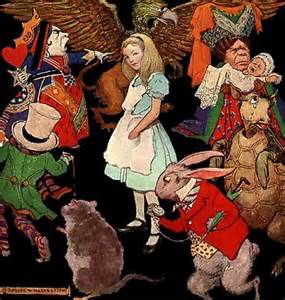
A couple of years ago Kay and I took our kids and grandkids and my mother and uncle on a family vacation in north Georgia. We rented a house with lots a space inside and an expansive yard, more like grounds. Other family members came and went during the week. The best feature was a front porch the width of the house with enough rocking chairs to accommodate most everyone. Evening meals were communal affairs and the table conversation lasted well beyond the bedtimes of grandkids. The reluctance to get up from the table was not for dread of cleaning the aftermath of a delicious meal but bringing a premature end to the stimulating and often raucous conversation that would make my mother blush just before she gave in to a grand cackle. It was during one such meal, in the middle of one such conversation that Kay blurted out, “I saw a white rabbit today.” Now imagine the sound effect of screeching tires on a vehicle as it comes to an abrupt stop as did our table conversation. All eyes came into unified focus directed toward Kay like the spotlight she hates. She had been out for a walk that day and claimed to have seen a white rabbit scampering across the grounds and disappear in the dense brush; admittedly, an unusual sight. Something in the table talk had triggered the memory of that experience, or Kay had disassociated from the conversation indulging in the private pleasure of seeing a white rabbit once again in her mind. We all began to laugh at the joy of so spontaneous a thought, and Kay had to endure some good-natured kidding from her family. “Kaymi, where rabbit?” John Erik asked, his eyes big as Mad Hatter tea saucers. Our two-year-old grandson at the time was the only one who ventured true belief. Everyone deserves to see a white rabbit whether others believe or not. “’Curiouser and curiouser!’” cried Alice…she was so much surprised, that for the moment she quite forgot how to speak good English.” That was a quote from “Alice’s Adventures in Wonderland” as she remarks on the effect of eating some cake that caused her neck to “open out like the largest telescope that ever was.” Everyone knows the common and versatile definition of the word “curious:” being inquisitive; prying; showing keen interest; defining something as odd or strange. But the archaic Latin meaning has more depth: “something made or prepared with skill, something done with painstaking accuracy, with obvious signs of paying attention to detail and marked by intricacy.” Over the years I’ve watched Kay go to work on a creative project, and whatever she sets her mind to, be it painting watercolors, making Santa’s, precision cutting crown-molding with a saw, flower arrangement, or hand-carving a bird house or blocks, she epitomizes the deeper meaning of the state of being “curious.” And by being in such a state of curiosity, the work she produces has a quality that goes…

Comments Off on Curiouser and Curiouser

Celebration of Tradition and Character

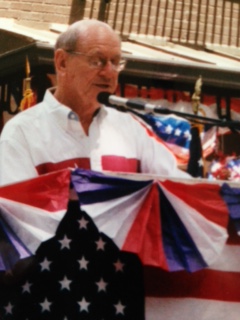
On July 4, 1977, a group of families in Nashville, Tennessee led by Dan and Pat Burton, along with my parents, threw a neighborhood birthday party for America. This was not a backyard barbeque where good friends gathered to eat and shoot off some fireworks. The celebration was conceived to honor our country, to honor those who served and serve in our military, to honor political leaders of every stripe for their dedication as public servants, and to honor citizens who live each day with “a decent respect to the opinions of mankind,” as we go about our lives pursuing those truths that are “…self-evident, that all men are created equal, that they are endowed by their Creator with certain unalienable rights, that among these are life, liberty, and the pursuit of happiness…” There was a parade of kids who rode their age-appropriate vehicles tricked out in red, white, and blue decorations; there were speeches; there was singing; there was the Pledge of Allegiance; there was the orchestra that played patriotic songs; and there was the recitation of a portion of the Declaration of Independence underscored by the orchestra playing Aaron Copeland’s “Fanfare for the Common Man,” which my father had the honor of performing each year from 1977 to 2001. A couple of times I filled in when ill-health prevented him from giving his best performance. In 2002, with the death of my father, the mantle was passed to me. My sister, Nan Gurley, has been the featured singer at this event even longer than I have been doing the Declaration. There have been special moments that stand out in my memory like the time when a bagpipe band played “The Star-Spangled Banner” and “Amazing Grace,” or the time a World War II, Native-American veteran and winner of the Medal of Honor was honored by a younger member of his tribe dancing in full regalia a beautiful ceremonial dance, or that stirring moment when a Federal Immigration Judge spoke eloquently of why people from all over the world wanted to be a citizen of this country and then turned to a group of more than twenty people from a dozen different countries and led them through the Naturalization Oath of Allegiance to the United States of America. I stood beside this multinational group listening to a dozen different accents saying the words that shed the skin of their old nationality and unified them in the new attire of an American citizen. That collection of families gathered to celebrate our country’s birthday back in 1977 has continued to this day growing in attendance from a few dozen that first year to several thousand. This year there was a special moment when Mayor Megan Barry honored Col. Sal Herrera for his service in the U.S. Army. My sister and I got to visit with Col. Herrera and share with him how our Dad had been a paratrooper who jumped in the Philippines in WWII and was a part of the first occupying…

Comments Off on Celebration of Tradition and Character
Read more about the article The One is Not
Poster for Alive and Free

The One is Not

Where did I put my wallet? I can’t remember where I left my purse. Have you seen my cell phone? Little things lost, yet important, not for the intrinsic value of a wallet, purse, or cell phone (insert brand name of your choice here), but because of what they contain…identity, real and imagined. If lost or stolen who are you? When Kay and I have traveled, domestic and foreign, she drives and I navigate. I use maps, landmarks, and road signs, not G.P.S. I take pride in that applicable life skill, doing the work myself and not have Siri do it for me. But on occasion, I have gotten us lost. It was only temporary, and while a little unnerving in the moment, who better to be lost with than your best friend. That’s adventure. And yes, when all else fails, I stop to ask directions from other human beings who have always been happy to oblige. The only time I do not like being lost is on stage. When people who have paid good money watch as you perform with your fellow actors and you suddenly lose your line. That is terrifying. Drop me in the wilderness with a compass, map, and some water, but God help me if I forget my lines while on stage in the middle of a performance. The sense of loss or being lost can be discombobulating. I don’t know why I relate this particular childhood memory with the feeling of being lost, but when I was thirteen or so, I looked at the world around me and wondered why I was put in this particular microcosm at this particular time because I believed I was nothing like the people around me, even my family. I assumed if I had not come from outer space, I must be adopted. One rainy morning Dad drove me on my paper route instead of me riding the bicycle I used to deliver papers, and I asked him if I was really his son. He stopped the car and looked at me; stopping the car and looking at me, his face a mixture of pity and consternation, meant the world had come to a standstill and I was the center of his attention. A feeling of dread crept up my spine as I awaited his answer. “You are flesh of my flesh, and I have the paper to prove it.” What a relief it was when he removed my birth certificate from a metal box on the top shelf of a storage closet and read aloud the details of my birth that included my full name, my father and mother’s full names, the full name of the attending physician, the full name of the registrar, and the embossed official seal of the state of Tennessee at the bottom left corner of the page. I was lost, but now I was found. In the fall of 2014 I acted in a film written and directed by Neil Hoppe entitled…

Comments Off on The One is Not
Read more about the article A Father’s Day Memory
Dapper Dad

A Father’s Day Memory

I was home on a Christmas break from Pepperdine University in 1973 and my father was taking me and my younger brothers on the Virgin Falls hike. A mutual friend who lived in the area had taken them on the hike a few months earlier and Dad and my brothers couldn’t wait to share the experience with me. “It’s like nothing you’ve ever seen,” they all kept saying as we drove the three hours from our Nashville home to the trailhead in eastern Tennessee. “They can’t find the source of the waterfall. It comes out of a cave on the top of this big hill, drops over a hundred feet and disappears. No one knows where it comes from and where it goes.” That, along with the promise of exploring deep caverns, climbing boulders, and being taught by my brothers how to “ride down trees,” raised my expectation for adventure. It was like walking into a primeval forest. For the first mile the trail meandered along a creek through spacious groves of indigenous tree varieties before it began a steep decline beneath thick canopies of mountain laurel until trail and creek converged into a large stream. We had to forge the wide stream hopping from rock to rock that rose out of the churning water in random patterns. While not life-threatening, a misstep meant wet boots and clothes for the next eight miles, and since it happened to be winter, that would add to the misery and ridicule from my brothers. The unofficial Arnold gauntlet was to see who could use the least number of rocks to get from one bank to the other. This crossing was probably twenty feet wide and the water flow was high, which meant there was minimal rock exposure to use as a landing and launching platform through the swift current. It required thrust and agility to leap across the stream bounding from rock to rock. Dad went first, pathfinder that he was, and my brothers and I followed. I don’t remember who won; I just remember marveling at dad’s ability to leap from rock to rock with a dancer’s grace and then the joy he took in watching his sons follow after him. Long gone were the days of having to hold our hands through precarious crossings of any kind. We all had been set free to stand or fall on our own; the momentum of manhood. We followed the stream for another mile and a half; it’s steady and gradual descent a deception we would come to see as a liability on our return trip. The footpath remained narrow, but the course of the stream would expand or contract as dictated by the contours of the landscape rushing around large boulders, tumbling into small waterfalls, or cascading down a natural rock slide into deep pools that during summer hikes afforded us opportunities to refresh our sweaty bodies with a dip in nothing but Adam’s original suit. At the halfway point we came upon…

Comments Off on A Father’s Day Memory