Read more about the article You Can Go Home Again
The Prodigal

You Can Go Home Again

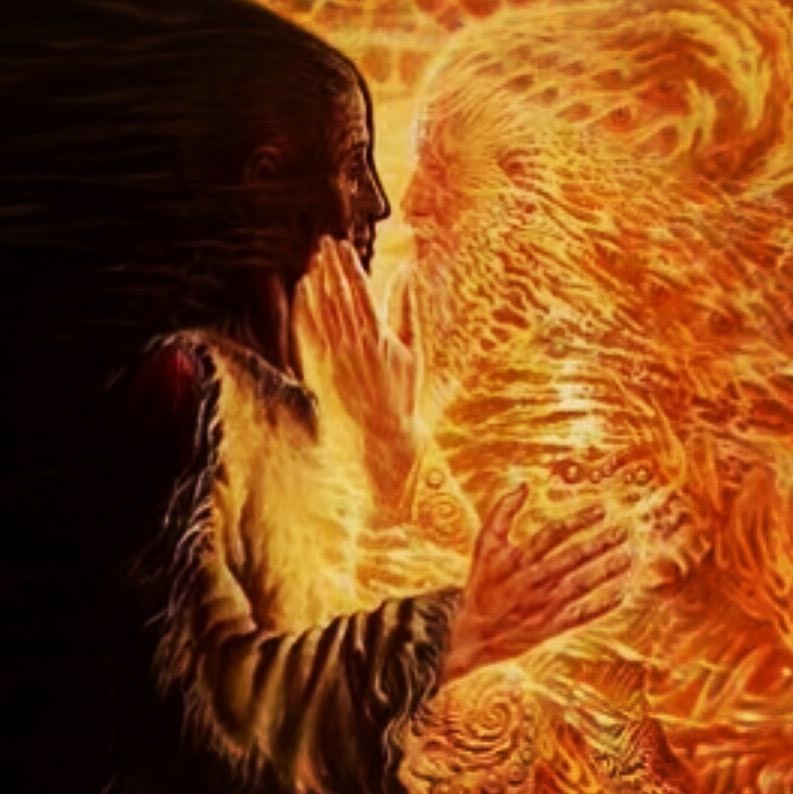
I never thought I would see this day. I did not even dream about it or hope that it might happen. It just happened. I did not try to make it happen; no strings were pulled; no favors called in; no money exchanged. It just happened. This is not some random act of stars aligning. Dare I say it, but this might be something ordained, and it took fifty years to get here. When I walked out onto the stage of Collins Auditorium to perform in Beki Baker’s (Chair of the theatre department at Lipscomb University) production of “Bright Star” in the role of Josiah Dobbs, I felt a powerful moment of coming home. At the age of twenty I did the role of Biff Loman in Jerry Henderson’s production of “Death of a Salesman” on this very same stage. To say that my relationship with the school was tumultuous would be an understatement. In high school after numerous infractions, I had been invited to seek education elsewhere, and when allowed to attend the college a couple of years later, I had to agree to be placed on all probation's with the exception of “Short Skirt” probation. Yes, that was a thing. Any infraction of any probation and it was sayonara.  (A Japanese term used in situations where you will either not see the person for a long time, or ever again.) Quite a tightrope to walk for a rebel like me. We parted ways shortly after “Death of a Salesman,” shaking the dust from our feet and with a “good riddance” on our lips. I do not blame the school. I was a handful during my high school years and for those few semesters I attended the University. We were not well-matched, and it took time and distance to bring us back together. My father taught music and drama at Lipscomb University for over thirty years, plus he was the worship leader for the chapel services. During my period as a prodigal the a strain on the father/son relationship was evident. But in time we were reconciled, yea verily; more than just reconciled. We took joy in our relationship and worked together in countless productions. That was a miracle I attribute to divine Providence; I needed the miracle of repentance while Dad needed the miracle of patience. Way back in the 1990’s I was touring the country with some one-man shows I had created. Dad invited me to perform a shorten version of one of these shows for the chapel service he led at Lipscomb. This was followed by an invitation from the powers-that-be to do a full show for the University’s annual “High School Day” where kids came from all over the country to spend a weekend on the campus and get the spiel for why Lipscomb University was a great choice for their college career after graduating high school. I was to perform my show on that Saturday night. The Collins Auditorium was packed with high school…
Comments Off on You Can Go Home Again
Read more about the article Bodies of Broken Bones
The Seven Works of Mercy

Bodies of Broken Bones

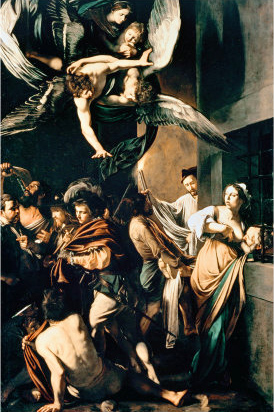
I love the stark realism the words of this title bring to mind. It comes from a phrase in “Seeds of Contemplation” by Thomas Merton: “As long as we are on earth, the love that unites us will bring us suffering by our very contact with one another, because this love is a resetting of a body of broken bones. Even saints cannot live with saints on this earth without some anguish, without some pain at the differences that come between them.” This spiritual image affords us a super power. We have a potential to have x-ray vision. We can look at other human beings and see the broken bones concealed inside their flesh. They too can see the cracked and fractured bones in our body. One can’t live in this fallen world and not carry inside us a broken nature. Surely, we try to conceal it from the world with all manner of disguises, but it is not hidden for long. One of my favorite painters is Michelangelo Caravaggio. He lived and painted in the late Renaissance period and is considered the first artist to bring realism to painting. He was a wild man; some even considered him mentally ill. Who knows? He captured a dramatic truth in his paintings that, when viewed, can bore through your soul much like his frequent use of a shaft of light onto the principal subject made more poignant by the vale of blackness around it. Whether Caravaggio fully understood what he was doing or not, so many of the subjects in his paintings are captured in a moment of brokenness. He never sketched before painting. The final version just poured out of him straight onto the canvas in a burst of impetuous fire. Merton’s “body of broken bones” and Caravaggio’s painting of “The Seven Acts of Mercy” (one of his last paintings) are beautiful reminders of who we are as human beings and how we have opportunities to “reset one another’s bones” in love to paraphrase Merton. All of the images crammed into this painting are the artist’s reflection of Jesus’ admonition in the gospel of Matthew of how we might show mercy to someone: (1 & 2) a woman visits an imprisoned man and gives him milk from her breast; 3) a pilgrim asks for shelter; 4) a saint gives half his robe to a naked beggar; 5) a saint comforts a beggar; 6) Samson drinks from the jawbone of an ass; and 7) two men honor the dead with a respectful burial (the seventh act of mercy was added to this list in the Middle Ages). All of us should be using our “super power” to see one another’s broken bones, and then pouring ourselves into acts of mercy like Caravaggio poured himself into his paintings. His vision and unbridled passion went straight onto the canvass. So in this painting, Caravaggio had a vision of the brokenness of humanity and re-imagined it through acts of mercy. He had his vision and applied…

Comments Off on Bodies of Broken Bones

Don’t Be The Bunny

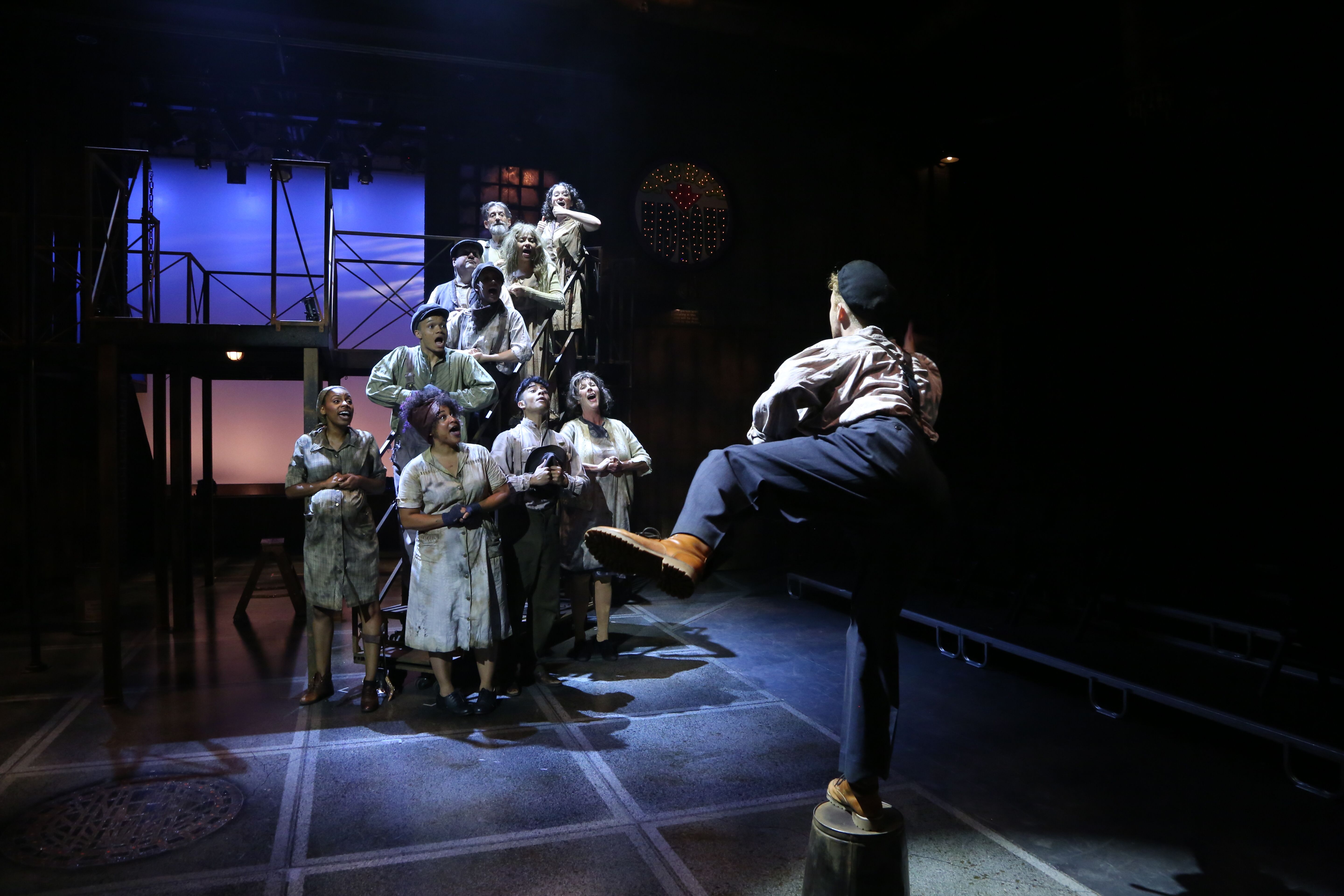
I have delayed my monthly story because I’ve been a little preoccupied ruling the world and “snuffing out popular resistance as if it were a naughty baby bunny.” It really is exhausting. There are just so many decisions to make—when your decisions are the only ones that matter, and there are so many people to keep in line—these people insist on having opinions contrary to my own. So yes, I have been busy playing a character that has created his own evil empire in a production of “Urinetown.” I have played bad guys before, but to give me an idea of the nuances of this particular role, Jason Tucker, the director of Nashville Repertory Theatre’s production of this hysterical musical, summed it up in a one-sentence character description: “Caldwell B. Cladwell is as comfortable on the dance floor as he is in the board room.” Now I can do evil, however, singing-and-dancing evil is a stretch for me. But I’m an actor with a job to do, so I have to make the audience believe the evil while singing and dancing along the way. I have to confess when a character requires me to sing and dance on stage it puts the fear of God in me. All those who asked what I did for my summer vacation, I have told them that I spent it learning music and lyrics, working on character development, and doing my “slow-drip” process of absorbing the dialogue of the character into my system. Kay was so ready for me to start rehearsals and get me out of the house. If she had to listen to me sing “Don’t Be The Bunny” one more time, she threatened to lock me in the shed. This brings me to the real reason for writing this brief opinion piece. I have had a career in the theatre since 1970. Well, actually my first time on stage was in 1955 in a production of “Medea” playing one of the sons of Jason and Medea. It was an easy gig; just look cute, and then play dead. I was a natural. So after a fifteen year gap between jobs, I got the role of Paco, the Muleteer in the musical “Man of La Mancha.” My dad played the role of Don Quixote. I never looked back after that. I was hooked. An actor I would be, for better or for worse. For the last few decades I have had the great good fortune to work with the professional theatres in Nashville in a variety of roles. People have asked me why I never went to New York. When I reflected on what a privilege it has been to work in Nashville, it dawned on me that New York came to me. Kay and I have seen a lot of theatre in our married life, and in some of the finest theatres in the world. And yes, while we can say we have been wowed from time to time by what…

Comments Off on Don’t Be The Bunny

Reservations in Heaven

I was raised in an era when our particular church persuasion believed that we were the only ones going to heaven, and only then if you behaved according to the rules and had done enough “good works” to get in, and if not, well too bad. My own heart knew that I would never be good enough or do enough to qualify. It took me awhile to ask the question that if our church affiliation was so unsure about its future hopes of heaven how then could they be so sure that anyone from another denomination had no chance of making it? But if you were from the “true” church and you did make it, then you were part of a very exclusive club. There is an old joke about St. Peter leading a group of new arrivals on a tour of heaven. When they get to a certain neighborhood in the heavenly city, St. Peter asks the group to remain silent as they pass by, “Because these people think they are the only ones here and we don’t want them to know any different.” This notion of theological exclusivity is nothing new. The Catholics developed it into an art form, from indulgences to the Inquisition, and the Protestants co-opted their distinctive takes on salvation as the Reformation movement dissolved into splintered factions. This belief of being right on all points is designed to make the ones who believe they are right to feel superior and create human structures where oppression of others is allowed to thrive. The same oppressive result happens among people groups whose tribal instincts encourage one race to feel superior to another. Bad things happen when that instinct is allowed to run rampant. I remember my parents facing down family members and others in their church community who held to beliefs of superiority in religion and race. It was a brave thing for a son and daughter of the south to declare that such beliefs were racist and wrong. They taught their offspring by example. Jesus got into trouble when he embraced the outsiders of society; those who were marginalized because of race, economics, politics, gender, and even physical disabilities. He faced great opposition from the powerful elite and even from his closest circle of friends. The Samaritans were considered an inferior race in those days, and brothers James and John, dubbed the “sons of thunder,” were soundly rebuked when they offered “to call down fire from heaven” upon a Samaritan village for not showing the proper welcome to their leader. Such a story would be laughable were it not for the racial bias exposed in the passage and the arrogant, misuse of power the brothers’ thought they possessed. On another occasion, Jesus exposed their bigotry by treating the Samaritan woman he met at the village well with respect. When Jesus tells the famous story of the Good Samaritan, he is asking us to get over ourselves and embrace the other with love regardless of skin…

Comments Off on Reservations in Heaven

You Gotta Love This Woman

We received a call recently from concerned parents worried about my wife’s influence on their children. The concerned parents were our daughter Lauren and son-in-law, Erik, and the children in question were our grand children. This was not an easy thing to accept. The complaint had to do with Kay’s lullaby catalog sung to the grand kids when she puts them to bed at night. I had long since been banned from lullaby duty. When I would pinch-hit for Kay in her absence all I came up with was “Purple Haze,” “Stairway to Heaven,” “Whipping Post,” and “Born to be Wild;” lullabies that were good enough to sing to my own girls when they were growing up, but now were somehow deemed questionable. I blame the “parenting” craze for that. “The times they are a changin’.” What precipitated the call was when Lauren and Erik were in the car with the kids a few weeks ago and began to hear their children singing in the backseat, “99 Bottles of Beer on the Wall.” The lyric the grand kids were singing began with the number ten and not the compulsory number in the title (I hope there will be no copyright infringement suits after this story goes public). Just to confirm what they heard, the parents listened for a few more musical rounds until the number dropped to seven. Husband and wife first inquired of each other if one of them had taught that song to the kids, but both denied it with an emphatic “no.” Then they turned around and asked the cherubs in the backseat. “Guys, where did you learn that song?” asked both parents in unison. The singing stopped and there was a brief pause from the backseat. By the tone of the inquisition, the cherubs suspected they might be in trouble. “Kayme!” came the unison reply. The horror. The horror. And straight to the speed dial number for Kayme did the parents go. The third degree started as soon as Kay answered. The interrogation did not last long. Kay laughingly confessed. When we are with the grand kids, bedtime unfolds in two acts: they all pile in our bed and I read them a couple of books. Afterwards, I will carry them to their beds (this practice of “carry me, carry me” will either end by middle school or when my back gives out). Once tucked between the sheets, I exit, Kay enters, and the lullabies begin. She sings the standards, but on this particular night while the parents were out on a date, the kids were more amped up than usual. I get blamed often for being the catalyst for this rowdy behavior and must plead guilty. Kay had come to the end of her play list, but those crazy kids wanted more. So Kay reached back into her long ago, and “99 Bottles of Beer on the Wall” started spilling out of her mouth; this from the grandmother who has never consumed a bottle of…

Comments Off on You Gotta Love This Woman
Read more about the article The Glory of Sons
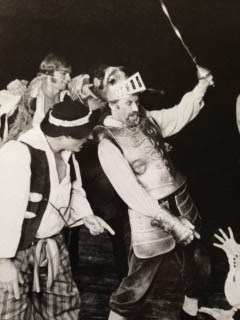
Man of La Mancha: Henry II is sword-wielding Don Quixote and Henry III is behind him whispering, "That's my old man."

The Glory of Sons

One can find countless quotes on what it means to become a man from the humorous and profane to the solemn and profound. In my opinion, becoming a man is a process of making fewer and fewer stupid choices and putting more and more distance between each stupid choice. St. Paul said it best, “When I was a child, I talked like a child, I thought like a child, I reasoned like a child. When I became a man, I put childish ways behind me.” Transitioning from “childish” mode to “manhood” mode is not the simple flip of a switch. There is no magic age to mark manhood that come with frameable “Manhood Achievement” certificates. We get to drive a car at sixteen. We can vote and join the military at eighteen; smoke and drink at twenty-one; get an education and secure employment shortly after; eventually find a mate. None of those chronological milestones assure manhood, and the mix-messages we boys and men get from the DNA of our genealogy, culture, media, social milieu, and bad theology can end up piecing us together like an abstract painting: visually beautiful on the outside, bewildered and lost on the inside. My long slog resembles Pilgrim in “Pilgrim’s Progress”; many foolish choices and wrong turns landing me in dark places with no sense of direction and no sightings of even a flicker of light. I needed rescue, and as I look back on that phase in my life, I didn’t even recognize my need for rescue. My father did. I believe rescuing came so natural to him that he was not even aware when he activated the impulse. He probably could not articulate how he came by such an ingrained virtue of his soul, and then would deny it if you attributed that positive feature to him. We were estranged at the time my rescue began. In my underdeveloped, idiot brain, Dad’s coolness factor was low, which shows how little I was paying attention to him and to my own foundering in the “slough of despond.” As clueless as I was about my plight, I was equally clueless as to what was happening to me when the lifeline was cast. Dad was offered the role of Don Quixote in the musical “Man of La Mancha.” I was not aware of it, but my father had asked the director to give me a chance at a role, which the director agreed to as long as I went through the audition process. If I weren’t embarrassingly awful, then I would be given a shot. The bar they set was very low, but I did land the role of a muleteer, one that was a named character with a handful of lines, and not just a part of the mob. My character’s name was Paco, and I latched onto Paco as if my life depended upon it. It probably did. I showed up for every rehearsal. I was even an understudy for the role of the…

Comments Off on The Glory of Sons
Read more about the article The Marriage of True Minds
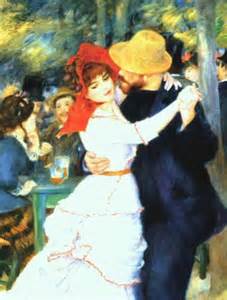
Renoir

The Marriage of True Minds

Around the time I turned twelve, I had an early and shocking coming-of-age moment of discovery. The whole family was at the drive-in to see “Geronimo” starring Chuck Connors, and no, the shock was not that white men, albeit, well-tanned ones, could play Indians in Hollywood movies. The recognition of that incongruity of casting would come later. The disturbance in the force was to learn that my father had drawn a line of distinction between his kids and his wife. “I love your mother more than I love you kids.” Imagine in my little mind the sound effect of screeching tires and the smell of burning rubber. The horror. The horror. The movie must not have been very good if Dad and I were having such a discussion. I may have set myself up for this distress by foolishly and perhaps smugly asking Dad to merit his love between wife and children. I was shattered, my footing lost, my foundation crumbling. Dad tried to explain that it was a “different kind of love.” How could love be different? Love is love; one size fits all, no dissimilarities or categories to my twelve-year-old mind. I was distraught, but if Dad’s analogy was true, I could only take comfort in the fact that I was the first-born. Perhaps he loved me more than my siblings or at least he had loved me longer. I could not grasp how this “different kind of love” would be applied to any perspective wife I might meet in the future. “When you fall in love, son, then you will understand,” Dad explained. In George Axelrod’s play “Will Success Spoil Rock Hunter?” (1955), a character explains, “Dear boy, the beginning of a movie is childishly simple. The boy and girl meet. The only important thing to remember is that—in a movie—the boy and the girl must meet in some cute way. They cannot...meet like normal people at, perhaps, a cocktail party or some other social function. No. It is terribly important that they meet cute.” A pretty stupid formula, however, romantic comedies have held to that standard for decades. The way Kay and I met was anything but cute. It was on a frozen pond playing broom hockey with a bunch of singles from church, and I knocked her on her butt going for the ball. Prior to that fortuitous moment, we had spied each other a few times “across a crowded room” (thank you Richard Rodgers), on different social occasions, but the broom hockey encounter stands out as “meet-uncouth” or “meet-boorish” or “meet-insufferable.” It was anything but Hollywood genteel. I know it is hard to image me as insufferably boorish. Years later, Kay would write of that moment, “For heaven’s sake, it was an ice hockey game on a cold Sunday afternoon among friends on a Tennessee pond; it was not the playoffs for the National Hockey League. All participants were only mildly competitive, and not to win but to have fun. Chip came to win. I was not impressed with his intensity…

Comments Off on The Marriage of True Minds
Read more about the article Unexpected Pockets of Beauty
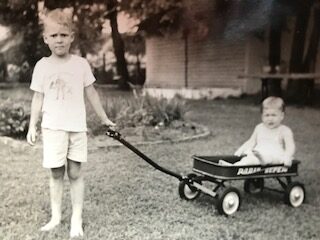
Pen and Ink drawing by Paul Geissler; 1951

Unexpected Pockets of Beauty

The early years of the six-member Arnold household were lean. Mom was a genius at devising recipes with hamburger. There was no disposable income. There were no luxuries. The bank account was like the proverbial turnip from which no monetary blood could be squeezed. Vacations were never to the beach or mountains or theme parks. Our vacation was a trip to my paternal grandparents’ home in Richmond, Virginia. The journey from Nashville to Richmond began in the predawn hours and ended well after dark. This was before the Interstate system, and two-lane highways on the map led through cities and towns and twisting through the Blue Ridge Mountains. If we got stuck behind an eighteen-wheeler, we would almost be asphyxiated by the diesel fumes before being able to pass. The fast-food industry had not yet popped up like gastronomic weeds, so Mom would prepare snacks and full meals for the drive. Our favorite was her roast beef and vegetables wrapped in heavy-duty aluminum foil. Dad would secure it on top of the manifold of the engine where it would slow cook until we got to Bristol, and we would stop at a roadside picnic area and feast. My parent’s oft repeated mantra uttered in weary sighs was, “It’s hard to get to Richmond.” But once we pulled into the driveway, our exhaustion soon dissipated. The Arnold grandparent’s home was a place of magic and mystery. A two-story house built in the 1830’s, on a couple of acres, with an expansive backyard devoted to a beautiful flower and lush vegetable garden. There was a huge oak tree in the front yard, so tall that its thick leafy crown was visible for several miles in every direction. Even holding hands and stretching our arms, the Arnold kids could not gird the circumference of the tree. At the base of the tree were several Civil War era cannonballs; the house served as a field post for a brief stint during that time. We played with the unexploded ordinance without ever worrying about its potential lethality. In the reverie of youth, I had no appreciation for the beauty of the garden or that my grandmother was a master gardener, a gift she handed down to her only child, my father. The “green fingers” or “green thumb” expression came into existence in the 1930’s and would apply to both mother and son. Their ability to grow varieties of flora or foodstuffs wherever they dug their trowel into the earth was uncanny. But planting and growing was more than a utilitarian exercise. Just as an architect would dream of spaces of beauty, so the creative natures of my father and grandmother would design unexpected pockets of beauty spaced throughout their miniature landscapes. I say "unexpected" because both mother and son enjoyed the element of surprise when they rounded a corner and came upon a beautiful cluster of blooms they had planted earlier now exuberant with color and shape. The Richmond garden had a main path running…

Comments Off on Unexpected Pockets of Beauty

Broke in Malibu or How I Met Angelina Jolie

In the early 1970’s both my sister and I heeded the call to “head west.” I was fleeing multiple failures in my attempts at higher education; a hippie lifestyle did not make for academic discipline or offer much professional opportunity unless you were a rock star or a cannabis farmer. I was neither. Most of my peers were closing in on a college degree by the time I was just getting started. My sister’s reason for fleeing was less complicated…a bad boyfriend. Pepperdine University had recently opened its Malibu campus, and through family connections, Nan and I had received music scholarships. My scholarship was based solely on the connections. Nan’s was that, but also merit-based. In that coming year, she sang in operas, musicals, choirs, an ensemble group, and for private fund-raising events. I schlepped choral risers, moved pianos, and drove the truck. We boarded the plane to L.A., wiser for our failures, and with the immigrant’s heart for a new start in a new land. Once we reached cruising altitude, I ordered bourbon on the rocks. At some point while sipping my drink, Nan asked me for the time. I turned my wrist, the one wrapped with the watch, and yes, the same one connected to the hand holding the bourbon, and spilled the drink into my lap. I was not then nor am now a sophisticate. But from that moment on we began to laugh, and we did not stop laughing the entire academic year. Nan and I had some money saved from different acting and performing gigs that we were able to take with us for “extras.” Our parents had little money to send, so pennies were counted and purchases were scrutinized. On Sunday nights the school cafeteria was closed and we had to adjust. At home, the Arnold's followed specific traditions after returning from church on Sunday nights: sandwiches made of the leftover roast beef from lunch, a tray of raw veggies, tea punch, pickles, and chips…Charles Chips, of course; we ate the cheaper brands during the week and saved the Charles Chips for Sunday night. And for entertainment it was Ed Sullivan, Bonanza, and Mission Impossible. There was no way to carry on that tradition at Pepperdine, so Nan and I improvised. We would borrow a vehicle from a fellow student (they were never invited to join us), and we would head into Malibu to a burger joint for takeout sandwiches and chips, poor substitutes indeed from the culinary bounty of our Sunday night leftovers, and then go to the drugstore to buy a couple of cheap cigars. We would drive Pacific Coast Highway to a spot on the beach, eat, smoke our stogies, and laugh, always laugh. The boys were falling over themselves for Nan’s attention. One guy gave her an opal necklace in hopes of turning her head. However, Nan saw the gift as an economic opportunity. We went to a pawnshop in Santa Monica, and Nan asked the owner how much it…

Comments Off on Broke in Malibu or How I Met Angelina Jolie
Read more about the article Often Wrong; Never in Doubt
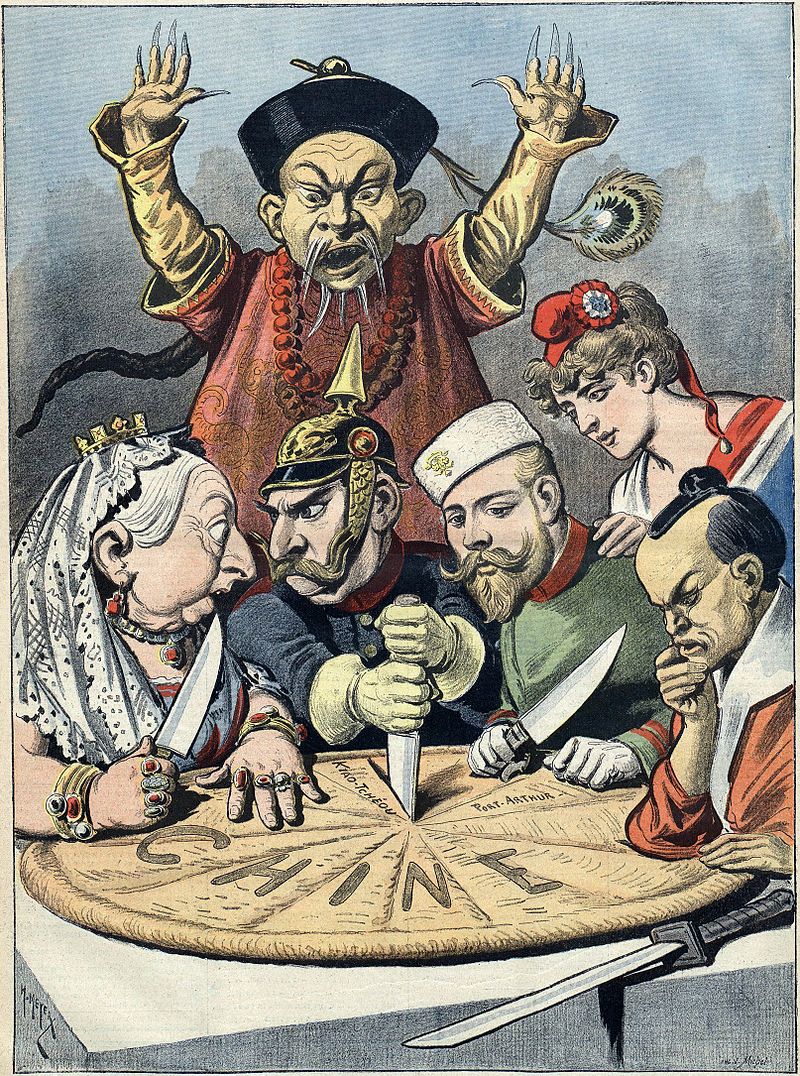
French political cartoon; Henri Meyer, Illustrator; 1898

Often Wrong; Never in Doubt

A few Thanksgivings ago the Arnold clan made up of the four families, plus guests (no we’re not a part of the southern mafia), gathered under one roof to celebrate the day. The weather was mild enough to enjoy being outside, so when not feasting around the tables, many folks chose to move outdoors. The patio fire pit was blazing and many of us clustered around it. I was standing in close proximity to the fire when someone in the crowd asked the question, “What is Boxing Day?” A smug look of “I got this” came over my face, and I proceeded to offer an explanation. I did sprinkle my history lesson with a little humility by interjecting that I was not sure of all the facts, but I believed Boxing Day to be a celebration of an uprising of Chinese nationalists against colonialism at the turn of the 20th century. That was about as far as I got before my youngest brother began to laugh and said, “You are such an idiot.” Right uprising/wrong holiday. Many Western countries including America and Japan wanted to reconfigure China, slicing up pieces of the country for themselves. These greedy nations referred to the Chinese militants as Boxers since many of the rebels practiced Chinese martial arts. I should know never to argue with or pontificate before my Mensa Society, big-brained, youngest brother whose encyclopedic knowledge of history, both foreign and domestic, is worthy of a professorship in the Ivy-Leagues. It was the perfect setup. I lobbed him an easy softball pitch and he knocked it out of the park. Now mind you up to that point, I had the crowd in the palm of my hand with my assured answer to the Boxing Day question. My confidence was worthy of a contestant on the game show, “What’s My Line”, where celebrity panelists question three contestants to determine which one was the true professional, thus the title, “What’s my line…of work?” That Thanksgiving Day for a fleeting moment, I proved my acting ability was superior to my historical knowledge. I embraced the family motto, “Often wrong, but never in doubt,” years ago. Facts? Truth? Who needs facts and truth? Facts and truth, as Twain said, should never get in the way of a good story. And while I attribute Mark Twain with that proverb, if truth is what you want, then there are no reliable sources that solidifies the maxim to him. However, if Twain didn’t say it, he should have said it. I ought to have known the Boxing Day origins and purpose. I had to sit through enough episodes of “Downton Abbey” with Kay. While some of the storylines held my attention, after the car wreck that killed off the character of Matthew Crawly so the actor could pursue fatter paychecks from Hollywood, my interest waned. I don’t blame Mr. Dan Stevens who played Crawly for seeking greener pastures; an actor’s gotta do what he’s gotta do. Boxing Day. What a…

Comments Off on Often Wrong; Never in Doubt