
Mr. Washington Goes to the Theater

I came across an article in The New Yorker recently by Adam Gopnik in which he reviews some new historical works that rethink the American Revolution. While the article was illuminating, it was his last two paragraphs that caught my attention. He recounts an action taken by George Washington to stay the execution of Charles Asgill (an execution Washington had ordered) in November of 1782. The nineteen-year-old Asgill was a captain in the British army and had been captured and held in a prisoner of war camp in Lancaster, Pennsylvania. Some months before British Loyalists had executed a captain in the Continental Army in retaliation for the death of a Loyalist soldier. The game of tit-for-tat had begun, and pressure mounted on Washington to hang a prisoner of the equal rank of captain. Asgill was one of twelve captains held in captivity at that camp in Lancaster. No captain stood out as particularly heinous, which would have made the selection process much easier. So twelve slips of paper were tossed into a hat and passed around the group. When Asgill withdrew his slip, it read “unfortunate.” Unfortunate indeed. An intense letter writing campaign ensued to spare the captain, led by Asgill’s mother, which inspired the French Foreign Minister to solicit on the captain’s behalf. Washington was looking for any reason to stay Asgill’s execution and these letters of a mother moved him to persuade Congress to spare the young man’s life. There are other fascinating details to this story, but this incident inspired a French artist and writer to write a play based on Washington’s intercession. Jean Luois Le Barbier sent a copy of his play to Washington with this note, “I hope, Sir, you will not disapprove of my zeal in publishing your sublime virtues in my performance.” What a beautiful example of art imitating life, and if that were not enough, Gopnik refers to Washington as a “lifelong theater enthusiast.” This I did not know, so my curiosity was peaked, and I went on the hunt for evidence that our first president was a theater patron. Washington recorded detailed entries in his diaries commenting on his frequent attendance at theaters in Williamsburg, Philadelphia, New York, and Alexandria, Virginia to see productions by professional acting troupes. Washington had favorite actors he followed and was known to attend a production he liked more than once. According to Odai Johnson in his book, “Jefferson and The Colonial American Stage,” Thomas Jefferson and Washington attended the same theatrical performance on eight occasions. It is not a stretch then to imagine our Founding Fathers being moved by productions of “Hamlet,” Robinson Crusoe,” and “Don Juan,” or laughing themselves silly when viewing “The Romp, or A Cure for the Spleen,” “High Life Below the Stairs,” and “Animal Magnetism.” You have to love the titles of these comedies. But all was not well for the theatrical arts in those early days of our nation. In an article in the “Journal of the American Revolution,” David…
Comments Off on Mr. Washington Goes to the Theater
Read more about the article A Mother’s Crown Jewels
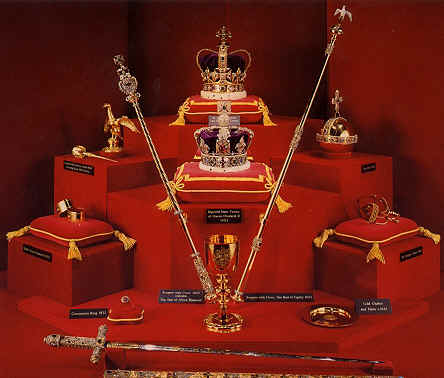
Crown Jewels of England

A Mother’s Crown Jewels

The Arnold kids were never given financial allowances growing up. My parents did not have that kind of disposable income. If we wanted to have spending money we needed to make it. So at the age of ten how I came by the exorbitant sum of a few dollars to purchase the blue-beaded necklace for my mother on Mother’s Day was probably from scouring parking lots and playgrounds for lost change. Our family had relocated to Bloomington, Indiana so Dad could get his doctorate in choral music at Indiana University. We lived in old Army barracks converted into housing for those students attending the University with their families. There were eight two-bedroom apartments, and the landlord warned emphatically that should a building catch fire, “Just grab your kids and run, because the whole place will be up in flames in fourteen minutes.” I'm not sure how he knew that fact, but for that two-year residency, our noses were always on the alert for the smell of smoke. The purchase of this necklace was the first time I was proactive in getting something for my mother without the aid and support of my father. With my pockets stuffed with coins, I peddled my bicycle over the railroad tracks behind our apartment building to a little shopping area where the store was located (a five-and-dime, not a Jared), and returned a successful “hunter/gatherer” with my prize in a paper sack. Mom wore it proudly to church that Mother’s Day Sunday, and countless other times. I was told often that this necklace was the favorite piece of jewelry in her collection, and for a time I believed that my offering trumped her wedding rings, fake pearl ensembles, and broaches embedded with imitation gems. When Mom died in 2015, my sister, Nan, was in charge of dispersing Mom’s jewelry collection, and the first thing she located was the blue necklace and returned it to the “giver.” Presenting Mom with the necklace that Mother’s Day brought tears to her eyes, a reaction I continued to induce for years to come though rarely for such sentimental reasons. Isn’t that what sons are supposed to do to their mothers? Make them cry often? If so, I kept pace with the average and most likely exceeded the allotment of times a son is supposed to make his mother cry. Those weepy occasions began to taper off when I married Kay. I think Mom’s quote to my bride on our wedding day was something to the effect of, “I’m handing him off to you. I did the best I could.” In the long march to my wedding day, before the “handing off,” Mom said that she had long ago given up praying that I would have good friends or get through high school and then college or just go to church once in a while. She finally resorted to begging God to just keep me alive…at least until she could find someone else to take over. I know, poor…

Comments Off on A Mother’s Crown Jewels

Maniac on Duty

Back in the day when gas stations were “service” stations, when the attendants wore uniforms tricked out with caps and bow ties ambling out of their small office areas, which sold everything from auto parts to cigarettes and beverages to cholesterol-clogging snacks, usually wearing a smile, and if the driver were a patron, offering a congenial greeting to the Mr. or Mrs., you were confident that you and your automobile was in good hands. If the attendant was above average, he might even remember the names of the patron’s kids. After inserting the nozzle into the tank and turning on the gas flow the pleasant attendant would ask, “Check that oil for you, Mr. Arnold?” Like the “Greatest Generation,” soon there will be no one left alive who will remember having been asked that question. And while the whoosh of gas flowed through the pump and into the tank of your car (I loved the smell of gas fumes escaping into the atmosphere, which might explain my cognitive issues), the wipers were looked over, the tire pressure was gauged, the windshield was cleaned, the oil level on the dipstick examined--topped off or a quart added if necessary--the spark plugs wiped of crud, and the radiator fluid level checked. By the time these standard services were complete, the tank had been filled. In those days a long black cord ran from the pumping station island, along the pavement, and into the office area that set off a loud clanging bell every time a car ran over it alerting the attendant that a customer had arrived. I thought it was loads of fun to bounce up and down on the cord making the bell go on and off with repeated jumping. You want to see a cheery station attendant turn instantly surly just get caught hopping on the black cord. My parents were not loyal to a brand of gasoline. Tiger tails, Dinosaurs, Fire Chief Hats, and even the winged Pegasus did not lure us into their stations unless the red needle was bumping against the “E” and there were too many miles between us and our preferred station. My parents would scrape together their loose change, just enough coins to purchase the fuel needed to get us back to our station for a proper fill-up. In the 1950’s gasoline averaged between 18 and 23 cents per gallon. Most service stations, ours included, had one or two service bays with mechanical doors that opened and closed automatically. I watched in wonder as the doors would rise into the ceiling seemingly without human effort as if Ali Baba had spoken the magic words, “Open Sesame.” Once the vehicle was inside the bay, the door would lower itself back to the ground concealing all the mysteries inside its asylum. Yes, asylum, for my nascent literary skills were soon to be tested and found woefully inadequate. When I began to develop the aptitude to identify letters, recognize written vocabulary, and understand how a succession of…

Comments Off on Maniac on Duty

The Dark Side of Inspector Clouseau

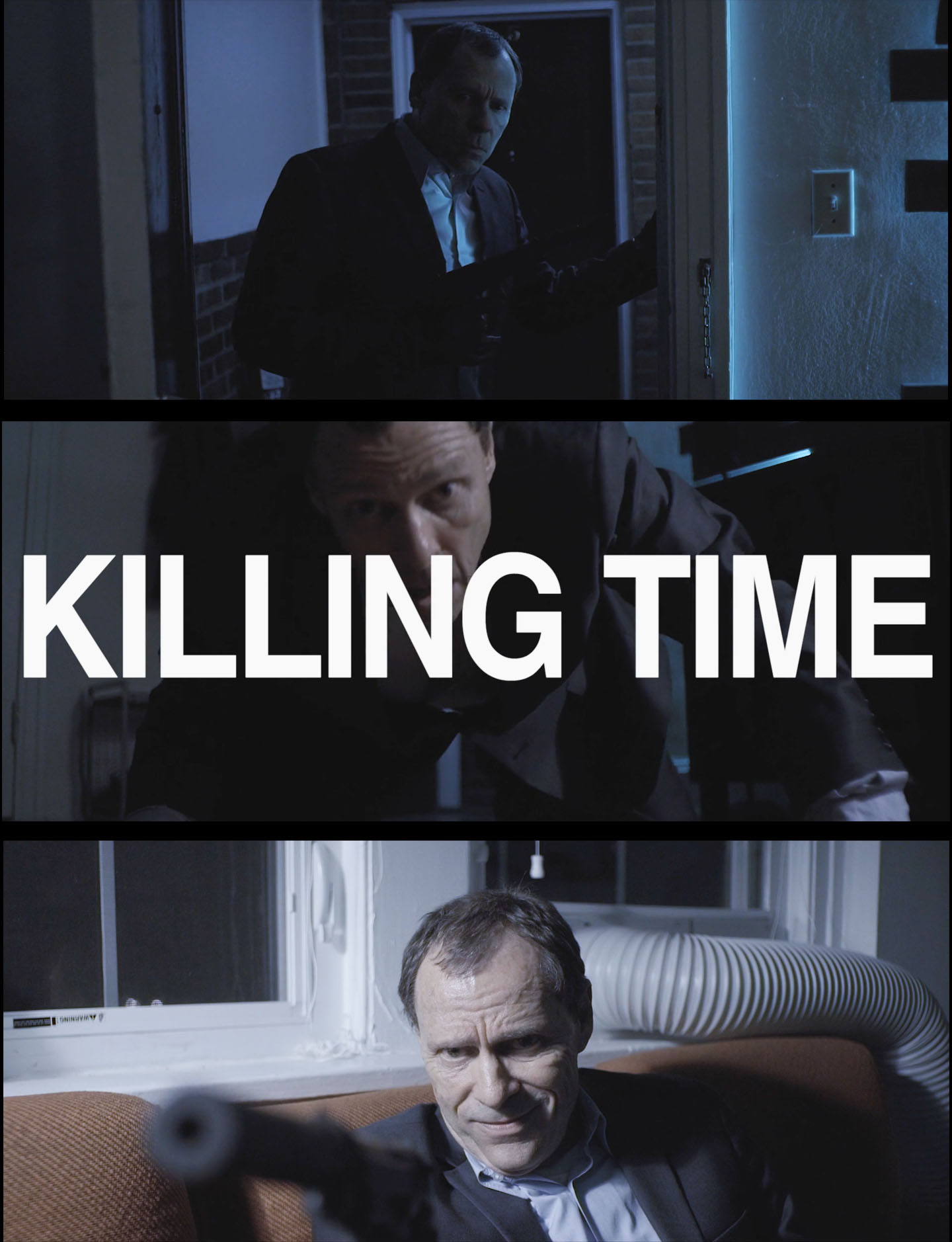
If you are squinting at this split-screen, poster image of a man with a weapon bearing expressions from quizzical to surprise to menacing and wondering “could that be?” then let me confirm either your weak eyesight or questioning mind or both. It is I, a gun in my black-gloved hand. And so let the Jimi Hendrix tune “Hey Joe” play in your mind, “Hey Joe, where you goin’ with that gun in your hand?” Now I do not find myself wielding a weapon very often. We live on the property that has been in Kay’s family for over one hundred years. After living in a condominium in Los Angeles for several years with a postage stamp for a back yard, it was great to have acres and acres of farm land out our back door. And part of the fun of having access to such open territory is the opportunity to have target practice with a variety of weaponry. When the mood strikes, we will gather up a collection of empty cans of Kay’s Big Sexy Hair or TRESemme spray or my Barbasol shaving cream or a box of clay pigeons and the skeet launcher, go back on the farm, and commence to shooting. When our daughters went off to college in Philadelphia they would bring their northern friends home and expose them to the pleasures of country life. It did not take long for word to spread on campus before caravans of cars packed with the girl’s friends would arrive for a Thanksgiving holiday or a spring break. The Florida beaches had fewer revelers during those years; hard to compete with bonfires and cookouts, four-wheel drive trucks and dirt bikes, a well-stocked pond with a dock, our makeshift firing range for target shooting, two racks from which to choose a pipe for smoking a variety of tobaccos (all participates of age and all substances legal), and lots of love. I am a fair shot although not as good as Kay, who even as a young girl, upstaged an older neighbor and his friend who kept firing and missing a rascally rabbit romping through our back field. She requested to take a shot, which was met with disdain by the males until she fired the .22 rifle. Her status as a one-shot wonder became legend, and she replaced Mr. McGregor as Peter Rabbit’s worst nightmare. Last summer we were hosting a large, all-day gathering at the house. We even splurged and rented an inflatable water-slide. We set up the fifteen-foot beast next to our garden house so we could power the electric generator which ran nonstop keeping the air pumping into the slippery monster so our guests, ranging in age from 3 to 70, could wear themselves out climbing and sliding…repeat ad infinitum. For weeks leading up to this day I had noticed a groundhog coming from beneath the garden house. He would raid my garden or forage the pears that had fallen to the ground from a nearby tree.…

Comments Off on The Dark Side of Inspector Clouseau

Know Your Limitations

In the days of my youth I had numerous unpleasant experiences of being part of a large group only to have it split like an amoeba in order to engage in a competitive activity. I so desperately wanted to fit in; and please dear God, don’t let me be picked last as the teams are chosen because it would only confirm that my talent (usually an athletic competition), is considered well below average by my peers. Consumed by anxiety in those days, I dreaded the athletic events where high achievers in the sport—dodge ball, basketball, flag football, etc.—were designated leaders of a team, and the Darwinian process of selection was used to determine the competitive sides. As names were called out, the chosen would stand behind their leader and whisper advice in his ear as to who might be his next best choice. I was never the last man standing. I usually ranked between mid-to-penultimate choice, and I don’t ever remember hearing groans from my fellow teammates when my name was called. Still the whole process was an exercise in humiliation. One year in high school I did make the basketball team but kept the bench well heated with three other boys. The four of us were allowed to play only if the score favored or disfavored us by twenty points and with less than two minutes on the game clock. With so little time left to play, what harm could we do? Once I became an actor I found myself, on occasion, with other professional artists engaged in art-related workshops and seminars. We would often be asked by the seminar leaders to form a small group to do an exercise. While the expectation to perform or compete was nil, I still felt the anxiety of being chosen. I sought out those folks of similar disposition and felt the gravitational pull of like-kind. The profession I chose is competitive and the selection process to find the right person for the job is daunting. As Martin Scorsese says “more than 90% of directing a good picture is the right casting.” Early in my career, I got an object lesson in knowing my limitations and the objectivity of being chosen to fit a role. What I experienced cannot be taught in any scholastic environment or workshop or professional seminar or program. Now when it comes to creative talent my father and sister had/have it in multiples: Dad could act, sing, teach, direct, play an instrument…a quintic threat; then my sister, Nan Gurley, is a quadruple threat: act, sing, dance, and play an instrument (now she is an established painter, so after this I’m going to crawl into a hole and die). By the harmonic confluence of genetic design, I consider myself fortunate to have one of those talents. In 1973, I was home from Pepperdine University for Christmas break. Nan was also home from Abilene University, and we learned of auditions for singers, dancers, and actors for the Opryland theme park that would open in late spring…

Comments Off on Know Your Limitations

Posterity

Many years ago I had to suffer through a procedure with a doctor. No, it was not an operation I had to endure, but an exposure to insufferable ignorance. The doctor had been asked if he would consider becoming a board member for a non-profit theatre of which I was associated. He said, “Actors are such phony people; they just turn their emotions on and off at will.” Following that logic, I almost turned on my “fury” emotion and cold-cocked him, but then after he had come to, the good doctor would have likely said I had just proven his point. I did not give him that satisfaction, but the incident has obviously remained in my memory. People who turn on an emotion at will are usually trying to manipulate you. They are the phony ones. The invitation for the doctor to become a board member was withdrawn. More recently I was asked by a good friend how I was able to channel emotions into a character. Emotions are a tricky thing and often produced honestly when real life circumstances dictate. What actors do, whatever their methodology or technique, is to create a character whose emotions are genuine when they react to the circumstances of the story. The initial impulses we have as humans to any situation are usually the most genuine. They may not be the best reactions to have but still the most honest. Actors are in touch with their emotions and know how to imaginatively apply them in the artistically controlled and safe haven of the theatre or film. They incorporate their own emotional life into the character they create, which brings truth to that character and makes him or her believable. No audience wants to spend time or treasure watching anyone “pretend” to do anything. You don’t expect a doctor to pretend to operate on you, or a sports team to pretend to compete. I have been the recipient of another great gift in the role of Henrik Ibsen in the play “Posterity” by Doug Wright. It is a privilege when an actor is given a character that experiences multi-layers of emotion. The opportunity for a role such as this is the reason I became an actor, that and the fact I was just not suited for any other profession. Here is a quick blurb about the play and the particulars: Nashville Repertory Theatre's production of Posterity, by Doug Wright. Live onstage at Tennessee Performing Arts Center's (TPAC) Johnson Theater, February 11th through 25th, 2017 with previews February 9th and 10th. Take a world renowned Norwegian playwright, Henrik Ibsen, near the end of his career, and force him into a room with Norway’s favorite sculptor, Gustav Vigeland at the peak of his, whose ambitions require him to persuade a reluctant Ibsen to sit for him. Their battle begins. Debating what a person’s true legacy is – the work achieved during our life or how our loved ones remember us – unexpectedly teaches them something fundamental. A startlingly…

Comments Off on Posterity

A Transformed Life

When Kay and I traveled to Italy a few years ago one of our favorite experiences was in Assisi. We had come from a couple of days in Sienna and had booked a hotel online the day before we arrived only to find out when we got to the location that the hotel was closed for renovation. In profuse, broken English the manager apologized for the website’s misinformation, and helped book another hotel. Assisi is a walled city built on a hill overlooking the valley. The city center is restricted to only pedestrians. We could drive to our hotel about halfway up the steep incline but could venture no farther by car. We checked in, threw our luggage in the room, and headed out. Just across the narrow street stood a man in front of his shop which specialized in olive oil, balsamic vinegar, and wines from local presses and vineyards. He waved us over, and for the next twenty minutes in manageable English, gave us the history of olive oil in the region and why the brands he carried were the best. He insisted we taste some of the finer selections of olive oil and balsamic vinegar. This was not like the wine tasting experiences we have had in other parts of the world. After only a few “tastes” we excused ourselves and hurried away. Before we could enjoy the sights of Assisi we had to stop at a pharmacy for some antacids to quiet our grumbling stomachs. A more refined palate might have enjoyed the subtle differences in the selections of olive oil and balsamic vinegar, but for my taste buds, only vintage wines were in order for the rest of our travels. Eight hundred years before, St. Francis lived in this city. As a young man he had a privileged life. His father, Pietro, was a wealthy merchant providing expensive material and fabrics to the medieval equivalents of Dior, Klein, and Cardin. And his mother, Pica, belonged to a noble family from Provence, France. This prosperity allowed his parents to indulge the whims of their son. One biographer referred to Francis as the “king of frolic” who surrounded himself with other young nobles indulging in every kind of debauchery. He was a quintessential party animal, not yet the hallowed saint of paintings, literature, and films preaching to animals, kissing lepers, and taking “Lady Poverty” as a wife. His early lifestyle did not foreshadow an inclination to follow in his father’s career let alone a holy calling. The world of the youthful Francis was in turmoil; conflicts between church and state, battles between Assisi and the surrounding towns, and hostile political and economic spats between the local classes. For us human beings there is nothing new under the sun. Francis’ carousing did not leave much time for academics, nor was he particularly interested in education. He aspired to be a knight of Assisi. He could afford the clothes and armor. In one of the many skirmishes between rival…

Comments Off on A Transformed Life

A Day in the Life of a Caregiver

Anyone of who knows me will find the title of this essay amusing. I am not a caregiver, professional or otherwise. I’m more of the day-tripper variety of care-giving. Kay has more the heart of a caregiver. Aside from her thriving practice as a mental health counselor, she also keeps our Nashville granddaughter on Fridays, which includes taking our uncle out for lunch and running errands for him. Yes, I live with a queen and a saint. And if you think this is going to be a story that will bring a tear to your eye, or that you might take offense at my annoyance with my adorable, nearly four-year-old, granddaughter and an uncle with Parkinson’s, then read no further. On several occasions I will join Kay on a Friday and spend time with my granddaughter and Uncle Tad, known affectionately in the family as U.T. On a rare occasion I will pinch-hit for Kay, giving her a respite, and do all things a good grandfather and nephew would do; not always with the best of attitudes, but the job gets done. On a recent Friday I left Kay sleeping soundly after a long night of counseling and braved the rush hour traffic into the city. Kay has a set routine that she follows, and the day before, she briefed me on my duties hoping I would not be tempted to stray. For the most part, I walked the “straight and narrow." The granddaughter and I went for a hike (my routine), and afterward we picked up U.T. at his assisted living facility. So far, so good, but the moment U.T. got in the car and said he wanted to get a special battery at Walgreen’s that makes his baseball cap light up so he can see to put his medicine in his dispenser, I got this foreboding feeling that we might be in trouble. I’m all for individual liberty that under-gird the rights of humans to be eccentric, but a baseball cap that lights up so you can see where to put your pills? Does China even make such an item? U.T. could not remember the brand name of the battery, just a number: 20-32, and that it was shaped like a flat, metal slug. It was in the battery section of the store, he said, and I thanked him for keeping me from wasting time wandering the candy and greeting card aisles as I got out and left him and my granddaughter in the car. Once in the store I faced a wall of batteries, enough selections to power half of the populace’s mechanical needs, and after a thorough scan, could not find a slug-like, 20-32 battery. I went back outside to confirm the particulars and returned for a second sortie. No luck. Why not ask for assistance, one might say, and normally I would, but given the particulars of the item and the purpose it served, I just couldn’t get the words to roll out of my…

Comments Off on A Day in the Life of a Caregiver

Watch Me

Living with royalty can be a difficult challenge. When I was wooing Kay I did not realize how close to the sun I was flying. It was not until we were at the point of no return in our courtship that I discovered I was marrying a double-crowned queen. Apparently back in the day when the world did not spin quite so chaotically, there are no rules governing the number of times one could be nominated to the “royal” court of school athletics or win the honor of being crowned Queen in multiple sports. Her first entrance into such noble and rarefied air was in junior high when she was nominated to be on the court for the football team. She later went on to become the Homecoming Queen for the baseball team. Then in her senior year of high school she was also crowned Homecoming Queen for the football team. And yes, we have the tiaras and yearbook pictures to prove it. A little known story regarding her status in the Homecoming Court for football during her middle school year involved her escort. Tradition was that a co-captain of the football team would accompany the female members of the court onto the field, present her with a bouquet of roses, and grace her with a peck on the cheek. All a part of the ritual except that year Kay served on the court one of the captains was an African-American. This was the first year of integrated schools in her small town, and until then, the football team had never had a black player. The football coach approached Kay and her mother privately and asked if the African-American captain could be Kay’s attendant. The coach explained that he expected some resistance from other parents if their daughter was put in this position, and he felt Kay and her mother would be more open to this integrated homecoming court. He was correct. This example of courage by Kay and her mother did not make the headlines or change the world, but such action goes a long way in the generational bloodstream that flows in a family as positive DNA revealing how one human being ought to respect and treat another. Over the years of being married to a queen, I have witnessed queenly behavior both high and low, mostly for the greater good, but on rare occasion, for the not-so-good. My chief concern was for any adverse effects this behavior might have on our two daughters. Both our girls attended the same university in Philadelphia, so for a number of years Kay and I were burning up the highway between here and there. One year during the fall season, like all universities, there was a campus-wide event where the students and families, faculty and alumni, gathered for the crowning of the queen for that year. The university was more progressive than most and the nomination process included the crowning of a king as well. Our youngest daughter, Lauren, was nominated…

Comments Off on Watch Me

Baseball, Bible, and Betting

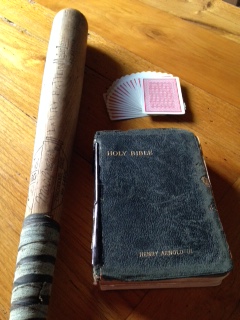
I have no fondness for alliteration. If I use the literary device it is either because I have no other words at my command to make the point, or my editorial skills were distracted at the moment I came up with the offending passage. It is not that I am anti-alliteration. Authors I admire have used the stylistic device to great effect: Poe, Coleridge, Frost, and Whitman, to name a few. It can be very effective in speeches. But on the whole, I try to stay away from its use. However, in the case of the title of this post, the alliterate use of these three B’s represent a seminal moment in my life many years ago; and it is this time of year when our attention becomes focused on the baseball playoffs and which two teams will make it to the World Series, that I’m reminded how our National Pastime, laying a wager, and Holy Writ converged in the blink of an eye to bring my world crashing down upon me. It was October, 1967. I was a senior at David Lipscomb High School. Minister and educator, David Lipscomb, founded Nashville Bible School in 1891. Years later the institution was renamed after its founder, and over the decades, it has expanded its educational web to encompass (yes, I just used an alliterative triple E) curriculum for grades kindergarten through high school, a four-year college, and multiple post-graduate programs. While much has changed, one foundational principal that has remained a “was, is, and always shall be” constant, are the required Bible classes for the students. It was in one of those Bible classes on that inauspicious day in October we high school seniors found ourselves pouring over the famous “Sermon on the Mount.” The passage from the Gospel of Matthew was our focus of study, and for our mid-semester final we were to memorize and write the three-chapter sermon—King James Version, of course, the “If it’s good enough for the apostle Paul...,” translation. The teacher was called away from class, but before his departure, he admonished us to use this time to memorize and meditate on the words of our Lord. Many remained in pious reflection during the teacher’s long absence, but some of us yielded to the temptation of worldly interests. The whispered conversation originated from a cluster of desks in a corner, and like a slow moving current, flowed out into the room. The topic was the World Series between the Boston Red Sox and the St. Louis Cardinals, not the Beatitudes. The debaters were evenly divided about which team would win the seventh and final game rating their chances on the strengths and weaknesses of each team’s roster. Finally, one ardent defender of his team challenged a counterpart for the other team to “put his money where his mouth was,” and as fast as old west gunslingers, out came their wallets. A chain reaction ensued and cash began appearing on the desk centrally located to the heated debate…mine.…

Comments Off on Baseball, Bible, and Betting