My Best Self

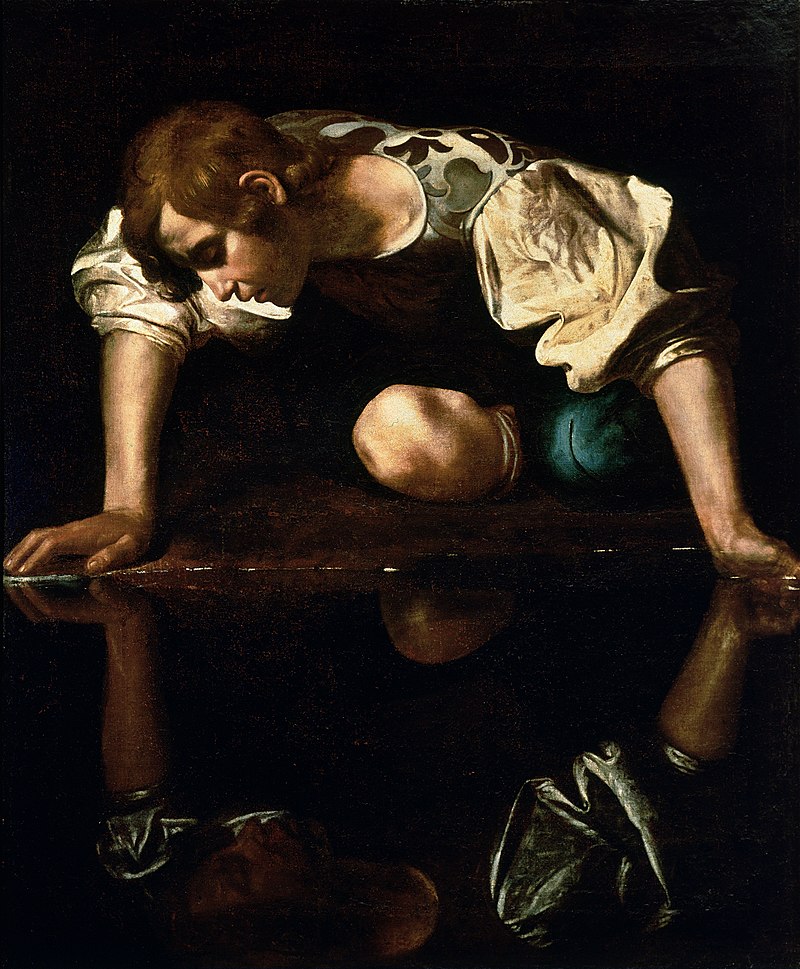
Oh how we love to look at ourselves. We keep returning to any available mirror to be sure that what we judged acceptable at the start of the day remains in place until we collapse into bed at night exhausted from self-criticisms or fears of judgment and scorn of others. Most of us don’t have a magic mirror that will speak to us the disingenuous words we want to hear: “Magic mirror on the wall, who is the fairest one of all?” A dangerous and invariably damning question. I hate to be the bearer of bad news, but there will always be one fairer than you. It must be disappointing not to find your name and image on the celebrity list of most handsome/beautiful people year after year. The magic in the mirror must be running on empty. Mirror Mirror illustration by Joseph Jacobs; 1916 But we keep going back to the mirror, and whether or not we verbalize the famous question, our actions betray us. Each new day the process begins in our pursuit to be “the fairest.” And now that modern technology has given us so many social outlets, we can post our fair likeness as often as we please. We can compare our images to those male and female models on the covers of magazines; bodies free of wrinkles, liver spots, or errant facial hair. The message is not so subtle; never go out in public without your silicone airbrush to remove the imperfections and enhance the attributes. Lest we forget, the wicked Queen in Snow White considered her mirror her slave and expected her mirror to always flatter. Stalin and Commissioner Molotov Such technology is also handy in removing the obnoxious person who insists on ruining any photo by making a stupid face or a person unacceptable to the elitist. Back in the day of the Stalin purges the process of eliminating the unwanted person was called “object removal.” Today it is referred to as “Photo shopped.” With our personalized magic mirror we can remove whatever or whomever we choose. Oops! The fixation with oneself and our public facade is nothing new. Narcissus had a similar infatuation with his “Selfie”, only this Greek demigod took it one step further. Narcissus never took his eyes off himself once he caught sight of his beauty. Unable to embrace his watery reflection, he lost his will to live. It was not a happy ending. We humans expend a great deal of time and treasure devoted to our self-obsession to transform ourselves into superior beings, though a little lower than the Marvel Comic gods. We read volumes of self-help literature, we join Wellness Centers, we drink all sorts of concoctions, we apply all sorts of goop, we Cross Fit and cleanse, we spend hours in the confession booth or a therapist’s office, and we emulate the habits of the titans of achievement. Because we believe our bodies and personalities are upgradeable like our iPhones, we doggedly pursue the quest of…
Comments Off on My Best Self
Read more about the article Saving The World
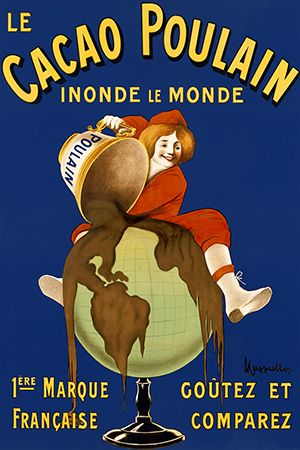
French Vintage advertising poster

Saving The World

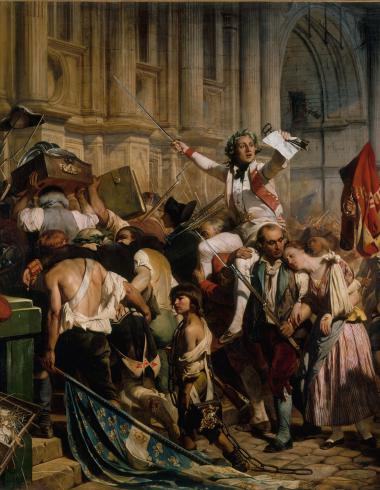
The world needs saving, and not by a conglomerate of handsome and beautiful super heroes as appealing as they are to behold. Have you ever noticed how much destruction goes into saving the planet whenever the super heroes marshal their powers to vanquish evil? Could this be the meaning of the phrase, “Omelets are not made without breaking eggs?” This quote is not original to your grandmother or some celebrity chef touting the casualties of broken eggs in the making of an omelet supreme, but to a French general, Francois de Charette, when put on trial for his war crimes during the French Revolution. Draw your own conclusion. I prefer my heroes, or in this case, heroine, to come in smaller more petite packages like my mother, Bernie Wyckoff Arnold. Armed with only a mixing bowl, a whisk, some wooden spoons, and a curious mind, she saved the world one recipe at a time. This did not come easy. She confessed that her biggest fear in getting married was not what one might naturally believe, but her incompetency in the kitchen. “I couldn’t make a glass of tea,” she often said. The pressure was on to develop her culinary skills, and fast, for a new husband who had been raised by a mother and grandmother with mythic talents to turn a peasant meal into a kingly feast that brought all five senses into a sharp focus of delight. Mom’s first job out of college and in her first year of marriage was with The Frank School of Music who published a special announcement of her employment: “We are proud to announce the engagement of Bernie Arnold as head of our Speech and Drama Department.” She had completed a B.A. in Theatre Arts from Lipscomb University and was working on an M.A. at Peabody at the time. She had judged many city and statewide speech and drama contests and performed numerous roles in her early career as an actor, but then I came along and spoiled everything. My three siblings followed in little over a decade, so Mom put aside her theatrical aspirations (she would from time-to-time co-star with my father in several productions when scheduling permitted), to become a full-time wrangler of four kids and a husband. In the early 1960’s she entered a Mrs. Nashville contest and won. She had barely caught her breath from her victory lap when the Nashville Tennessean offered her a job as the Food Editor in 1965. She served in that position for eight years and then jumped over to the Nashville Banner, and remained at that newspaper until she retired in 1992. For someone who could not make a glass of tea in 1948, she faked it until she made it, conducting hundreds of interviews, publishing thousands of articles and recipes, and winning awards along the way. Our family had the benefit of Mom and Dad’s ability and curiosity to try many of the recipes she wrote about in her articles. We kids…

Comments Off on Saving The World

Sticks and Stones

One day when I was in high school I saw a truck pull into our driveway. The body of the truck was well used: coating of dirt, rust spots, some dings and dents. A guy got out and started ambling up the brick walkway to the front door. I recognized him as a fellow student though we did not run in the same circles at school. He was quiet, did not attract attention, and thus, kept a low profile. When the doorbell rang, I opened it and stepped out. “You and the others at school have been calling me ‘farmer,’” he said, his voice clear and steady, his eyes a pinpoint focus on me. It was true. I had been calling him “farmer,” and not out of respect or kindness or even interest in what he and his family did for a living. I said it like the others said it, in a cruel, derogatory way. I wanted to be a part of the “in” crowd, and to be a part of the “in” crowd, I had to go along with a teenage boy’s fondness to encourage and use disparaging terms to demean another human being. To be cool in this “in” crowd one had to look down on others and coin insulting names to describe them, and then use those insults in such a fashion that would amuse the other members of this “in” crowd. For the truly sinister mind, one would craft scenarios for how the victim might live under a cloud of deprecating monikers, so in this case a lot of agricultural jokes were created. We never thought ourselves cruel. Those who indulge in such behavior never do. “If I hear you call me ‘farmer’ again, I will beat the hell out of you.” He did not wait for a reply. After making his proclamation, he returned to his truck and drove away. He had come alone. What courage it took for him to come to my house and face me. He had also been wise to separate me from the pack. What a coward I was for being a part of this pack that had driven him to take such a bold step. I went back inside and shut the door, and then heard Mom’s voice coming from the kitchen. “Honey, was that one of your friend’s from school?” I don’t remember my response to her question. I’m sure it was cagey if I answered at all. I was naked and ashamed and needed covering. I don’t know if the young man made the rounds to the homes of the rest of the “in” crowd facing each one mano a mano and shutting down their cowardly natures with a single threat. If he did, I don’t remember any of us talking about it. We would never admit our spinelessness to one another, a pack of cowards would never do such a thing. That’s why they run in packs. What I do know is that I stopped…

Comments Off on Sticks and Stones
Read more about the article The Great Bicycle Crash of 2001
Cover Art - The rarely used Velocipede

The Great Bicycle Crash of 2001

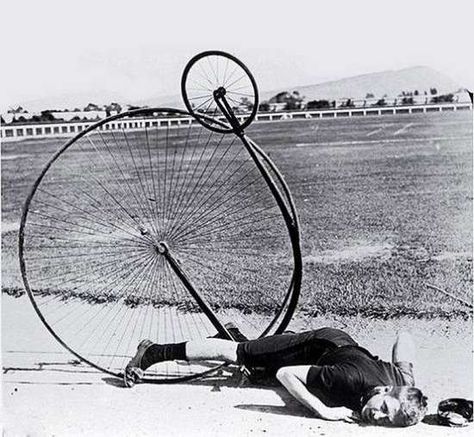
I love it when I make Kay laugh. When she laughs, all’s right with the world. Kay has what I call the pratfall sense of humor. She can watch a collection of videos on AFV where people are engaged in all sorts of shenanigans and end up falling on their bums, and her amusement will ascend with each humorous consequence. The sound of her laughter is much like that of the old cartoon character Muttley the Dog with her face turning red, the tears rolling down her cheeks, building and building until at any second one expects a lung to be expelled. And who among us does not secretly enjoy the humiliation of others? Which brings me to a story of my humiliation; one that has brought her much enjoyment in the countless retelling. I love riding a bicycle. By age twelve, when I got my first official job as a paperboy, and for the next four years, I perfected my bicycle skills by riding my seven-mile route twice daily slinging newspapers, dodging traffic, and outrunning dogs intent on taking a bite out of my leg. That is why when we moved to Kay’s family farm, one of the first things I did was purchase a mountain bike. I could ride a ten-mile loop from my driveway and back through the countryside. I stayed on the surface streets, no off-road riding, with a nice mixture of steep hills and straight stretches. It was not an Ironman training route, but for thirty-five minutes, it doubled my heart rate. On the back half of the loop there was a long stretch of road where I could really get up some speed, and I would try to go as long as I could without touching the handlebars; either leaning forward to reduce the wind resistance, or leaning back, arms outstretched, creating the sensation of flying. I rode this route nearly every day, rain or shine, the exception being in conditions of ice and snow, and in Tennessee, that was a rare exception. The Fourth of July, 2001 was a day filled with heat and sunshine. We spent that 4th as we had done for years: attending the Whitland Avenue block-party celebration with thousands of other people singing patriotic music, hearing speeches, and listening to my father dramatically recite a portion of the Declaration of Independence while members of the Nashville Symphony played Aaron Copeland’s “Fanfare For The Common Man.” But before that event, as always, I rode my ten-mile route. When I hit the long, flat stretch of road and had built up sufficient speed, I released my hands from the handlebars. About halfway along that straight section, I heard a snap of metal. I could not immediately identify the source. I thought it might be a break in the link of the chain or a rock slung against the metal frame. Then suddenly my whole world shifted into slow motion while my whole life passed before my eyes. The seat dropped as…

Comments Off on The Great Bicycle Crash of 2001

Mob Rule

The piñata and the unicorn have something in common for our family. It is an unusual union. Back in the day, I took a swing or two at a piñata, most likely after a couple of beers and the encouragement of the crowd; certainly with no malice to destroy a papier-mâché object or with a craving to have the candied guts shower over my head. It has been a long time since that incident. But this year, I did attend a birthday where a mob was gathered around a piñata and each participant got to take their club-wielding turn at the creature with its belly full of treats. In June, Kay and I went to Scotland for a couple of weeks. Before our departure, a grand daughter requested we bring her back a unicorn, her current stuffed-animal obsession. I was not aware that Scotland’s national animal was the unicorn. Images of it abound in the country. The unicorn is to Scotland what the bald eagle is to America. And while both creatures have achieved notable status in each nation, we know which one is real. That does not however, take away from the power each one represents. When Kay and I toured Stirling Castle, tapestries of “The Hunt of the Unicorn” were on prominent display. These works of art portray an odd co-mingling of pagan and Christian mythologies. The unicorn has a long history in Scotland dating as far back as William I in the 12th century who used the image in his coat of arms, and King James III who stamped a depiction onto gold coins. While representations fashioned in stain glass, on banners and flags, painted onto coffee mugs and sewn into bath towels were available at every gift shop and street vendor, we purchased a stuffed version of the horned animal in a thrift store of all places, complete with a rainbow-colored mane and tail. It had been “gently” loved. The grand daughter was thrilled, and it has taken its place in the menagerie of creatures, foreign and domestic, wild and fabled, that fill her crowded bed. How that kid sleeps with all those animals is a mystery. Perhaps it is the nesting effect. Like the unicorn, the piñata also has a multi-cultural history. The Chinese lay claim to the origin to a centuries-old whacking of the image of a cow filled with different types of seeds at the beginning of every New Year hoping for a favorable climate for their agriculture. Then the Aztecs say they invented the practice to honor the birthday of a god with a multi-syllabic name who needed appeasement—perhaps for every battered piñata there was one less human sacrifice. Once the Spanish monks moved into the Mesoamerica neighborhood, they immediately saw the opportunity to co-opt the ritual and created their own version of the tradition in the 14th century calling it “The Dance of the Piñata.” A seven-point piñata represented the seven deadly sins. The piñata itself represented evil, and the treats…

Comments Off on Mob Rule

Making a Monster

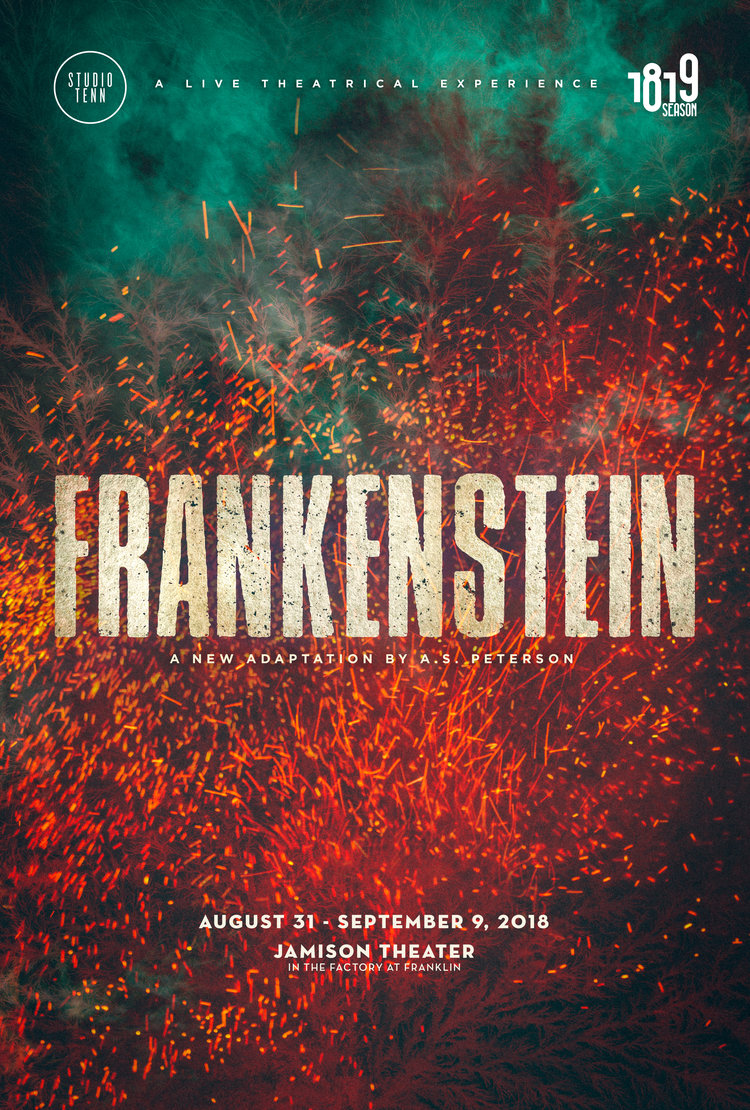
Find some discarded body parts; grab a tool box: hack-hack, saw-saw, cut-cut, stitch-stitch, read up on your ancient alchemy (copies at every local library, I’m sure), add a jolt of electrical energy, a splash of elixir, and voila, you have a creature. The creator might call it his “baby.” Some might call it an oddity. Others might call it an aberration. And still others (the less imaginative among us), a monster. Mary Wollstonecraft Godwin Shelley called it “Frankenstein; or, the Modern Prometheus.” We all know what happened to poor Prometheus who thought he could steal fire from the gods and get away with it. Ah, the unintended consequences of hubris. One evening in 1816, a group of romantic bohemians were living in Geneva, and in an attempt to ward off boredom, Lord Byron blurted out “We will each write a ghost story.” Everyone thought it a grand idea, but none of these romantics could focus their creative and poetic natures into writing a good yarn; except for Ms. Shelley. Bryon lay down the gauntlet, and Mary Shelley picked it up. Eighteen months after Bryon’s challenge, Mary Shelley published “Frankenstein.” She was pregnant when she started writing “Frankenstein,” and pregnant again when she finished. Here was a beautiful confluence of “pregnant” creativity. After two centuries of this story existing in the public consciousness, we often confuse the moniker Frankenstein. It has become the interchangeable designation between that of the creator and that of the creature. It is a frequent misconception when a story has morphed into a mythology, and the two main characters have merged into a duality of a common title and identity. But there are stark differences between the Doctor and the Creature…I hesitate to refer to Dr. Frankenstein’s creation as a monster. The literary critic, Harold Bloom, has pointed out a significant difference in an essay he wrote on Shelley’s story, “Frankenstein’s tragedy stems not from his Promethean excess but from his own moral error, his failure to love; he abhorred his creature, became terrified, and fled his responsibilities.” It is a tragedy when we fail to love, and perhaps the “failure to love” is what creates monsters of us all. We are all “fearfully and wonderfully made,” as the psalmist wrote, but it is the responsible and volitional acts of genuine love that makes us human and not just stitched together parts of anatomy. In celebration of the 200th anniversary of Shelley’s novel, Studio Tenn has commissioned a new stage adaptation of “Frankenstein” by A.S. Peterson for its first play of the 2018/2019 season. The playwright has done a brilliant job of presenting Ms. Shelley’s multiple conflicts and tensions between the human desire to create and the results of one’s creation. What an individual might create with the noblest of intentions, and perhaps for the good of all mankind, may in the end, turn out to have monstrous qualities or actually become a monster. Just think of Einstein and Oppenheimer contemplating the incomprehensible power of atomic energy…

Comments Off on Making a Monster

Highways of Death

My lovely wife Kay has never met a stretch of highway that intimidated her. Regardless of which side of the public thoroughfare a country has chosen to dictate its traffic flow, she has never been concerned with the directional markings painted on the road. Staying inside designated lanes is not a priority: “Too confining,” she argues. This must be her creative nature and outside-of-the-box thinking. Yes, there is a beautiful little rebel inside the heart of my bride. Past Highways of Death include, but are not limited to, the length and breadth of the Amalfi coast. To clarify, the measurement of breadth in the case of this twenty-five mile stretch of coastline in southern Italy barely accommodates two vehicles as the scrapes and dents and broken side-mirrors attested on many of the cars we passed during our excursion in 2012. With the mountains on one side and a three-hundred foot drop into the Mediterranean on the other, the highway is unforgiving, and better to have a dent or two in the side of your vehicle than the alternative. The way many of the drivers use this stretch of highway, the guard railings to prevent a vehicle from plunging into the sea is more for show than for safety. Oh yeah, and then there are the horses; dodging pack horses is an added test to a driver’s skill set. Then there was the time two years ago in Lyon, France when Kay went the wrong direction on a one-way city street and we faced an approaching street car. She took the only move she had, pulling onto the sidewalk. After the street car passed, she got back on the road and immediately turned our car in the right direction. One must look at the positive, Kay would say: there were no parked cars along the street preventing her from using the sidewalk at that strategic point when she needed to avoid the head-to-head, and “no pedestrians were injured in the making of this move.” She ignored the shocked and terrified faces of said pedestrians or their curses as she righted the car and drove away. It is a wondrous thing to be cursed in a foreign language. Or the time we were driving through the French Alps to Chamonix when construction work on the main road forced us to take a deviation (French for detour). She was a reckoning force cruising the mountain-pass roads like the latent Indy driver she was, is, and evermore shall be; straightening out the switchbacks and hairpins like an expert, braking into and accelerating out of the curves like a pro. Mind you, this was a secondary road with few guard rails, so one faulty move and we would have sailed into the wild blue yonder. When we travel internationally our roles are well-defined: I the pathfinder and Kay the pilot. This recent trip to Scotland, I grudgingly agreed to a Global Positioning System in our rental car. The GPS is an affront to my keen…

Comments Off on Highways of Death

Proof of Belonging

The first time I questioned my sense of belonging came a few seconds before a near-death experience; nothing like your own personal NDE to make you sit up and take stock of your life, the world, and the universe at large. At the age of twelve I got my first job as a paperboy. For the next four years, morning and afternoon, I peddled just over seven miles through the neighborhoods near where I lived slinging The Tennessean and The Banner into the driveways of my subscribers. The tubular newspapers secured with a thick rubber band were stuffed into a large metal basket mounted on the front of my bicycle and two saddlebag-type baskets attached over the rear wheel. The paperboy motto was similar to the unofficial creed the U.S. Postal Service adopted from Herodotus’ description of the faithful couriers in ancient Persia of the 6th century: “Neither snow nor rain nor heat nor gloom of night stays these couriers from the swift completion of their appointed rounds.” A subscriber expected to receive his daily paper as much as he expected his daily mail. I was depended upon, and the responsibility made me feel like a man of the world. Six days a week I could handle the deliveries on my bicycle, but the size of the Sunday paper was monstrous—half news, half advertisements—and the subscribers for the Sunday paper nearly doubled as well. This required parental assistance. So I struck a bargain with my dad: he would drive me on my Sunday morning route, and then we would head to church and I would help him fold and distribute the “Order of Worship” programs in the hymnal racks on the backs of the pews. It was a mutual benefit, but with one glaring difference. I would often complain about having to keep my end, while Dad never complained. It was one of many disparities in our personalities. Dad was given a paltry budget from the church to pay for the hundreds of programs used each Sunday, enough to purchase the paper to make the copies. He was meticulous in choosing the front cover: scenes of nature, paintings of Old Masters, sculpture, stained glass, of sacred spaces and illustrated scriptures; all images designed to frame the hearts and minds of the congregant for worship. The measly amount devoted to such innovative extravagance did not pay for the actual printing costs. After typing the original mock-up of the program, Dad would head down to the basement, pour in the chemicals for printing, and then hand-crank each copy on the mimeograph machine. I can still hear the rhythmic ka-chunk, ka-chunk, sound rising beneath the floorboards from the circular motion of the handle. One revolution spat out one program. Sometimes Mom would work the machine while Dad folded the programs, and on occasion, I was commandeered to do the cranking. The printing chemicals caused my eyes to water and gave me headaches. The fumes probably killed a few million brain cells each time I worked…

Comments Off on Proof of Belonging

Music Made in Hell

It is a wondrous thing what self-discoveries are made within the human heart when a layer of innocence is lost. A dramatic experience may destroy a belief system but make way for new wisdom. From 1959-1961 we lived in Bloomington, Indiana while Dad was completing his doctoral course work in choral music at Indiana University. Until that year, I had been in a private school environment (K-third grade), and was suddenly thrust into the culturally broader world of public education and living in diverse, multi-dwelling housing complexes instead of a single family home. In an earlier post, I have written a different story of that time entitled “Blood Brothers.” It chronicles my friendship with Raymond, one of three best friends I had during that two-year period, and a lesson in courage my blood brother taught me. The other two boys were Eran from Israel and George from Sweden. We were a crew. Our fathers were all doctoral candidates at Indiana University in various fields of study. We lived in University housing, though Eran and George lived in the newer, more spacious family apartments while we lived in the cramped, renovated army barracks. We attended Fairview Elementary public school together.   What I may have lacked in residential amenities enjoyed by my friends, I made up for by having easy access to a recreational area like no other. Less than one hundred yards from our barrack apartment building was a railroad track that cut through a hill leaving jagged, thirty-foot cliffs on either side then went under a bridge at the highest point of the terrain. Eran and George happily abandoned the man-made, state-of-the-art play sets built for their apartment complexes for the more life and limb threats of cliffs and woods and trains. There was nothing cooler in the world than to be playing on the tracks, hear the whistle of a train, and see the Cyclops-beam of the headlight making its circular pattern in the snout of the engine as it headed toward us. The yards were not far away, so a train was either slowing down coming into the yard or building speed as it departed. Either way, you had a minute or two to get off the track and scale the jagged cliff sides to a safe perch. We three would scream at the top of our lungs as the trains rumbled by and would toss Osage oranges at the cars, pumping our arms in the air with delight as the pulpy, inedible fruit exploded against the steel walls and rooftops. What a playground. And yes, this was back-in-the-day before the trend of "parenting" had taken over our modern culture. Outsiders that we were, it did not take long for the three of us to make enemies with some of our older schoolmates at Fairview Elementary. One Saturday, a gang of four or five boys from a neighborhood near our school rode their bikes into the section of University housing where I lived. My mother was hanging…

Comments Off on Music Made in Hell

A Good Scrap

I had my share of scraps growing up; landed a few punches; took several more. I’ve always heard that it was a rite of passage for young boys to fight. If so, I performed that rite many times in the days of my youth. And not to besmirch the ladies, my two young daughters enjoyed “rough fighting” with their old man when I was still able to get down on the living room floor and be their wrestling opponent. Funny thing was I always lost these battles. In my defense, it was two against one, and the girls were brutal. There are heroic scraps and then there are inglorious ones. The scraps I got into as a kid were more of the inglorious kind. It is possible to learn more about the darker shades of one’s character from an inglorious scrap than from a heroic one. For a short time in high school I played basketball. Well, let me qualify that statement. I spent more time keeping the bench warm than heating up the court with my nimble basketball skills. The coach put me into a game when we were either twenty points ahead or twenty points behind with a couple of minutes left to play on the clock. Either way, there was little damage I could do on the court if given this brief moment of glory, but when offered the chance, I took my two minutes of fame and worked up a good sweat. I was aggressive on the court. I went after the ball. If I got an opportunity to take a shot, you know I took it. I did not mind fouling my opponent either, letting him know that as long as I was guarding him the game was not over until the final buzzer. So now to my inglorious scrap during one of my rare appearances on the basketball court. We were playing an arch-rival, and during my two minutes of court time, elbows were thrown as the players went for the ball at each rebound. I’m no angel. My elbows connected with an opponent's ribs on occasion. But on one particular rebound when I leapt off the floor to catch the ball and gripped it with both hands as it bounced off the backboard, the two opponents on either side of me began to throw as many blows against my defenseless body in an attempt to steal the ball before our feet returned to the hardwood floor; all for the sake of winning the game, of course. No whistle was blown. It was flagrant fouling, but the referees must have been ready to get home and wanted to be done with this game. When my feet hit the ground I spun around and looked squarely into my opponent’s face, the worst offender of "thrown" elbows; it was two against one, remember. “You want the ball so bad, you can have it,” I said just before I threw the ball right into his face. (For the…

Comments Off on A Good Scrap