Today’s media bombards us with images and stories of human pain and grief, each with a set of circumstances that could be woven into a full-length play or novel with characters that bear the universal truths unique to all humanity. This is nothing new. Throughout history artists have given us great expressions of grief in literature, painting, and sculpture that drills down into the core of our soul.
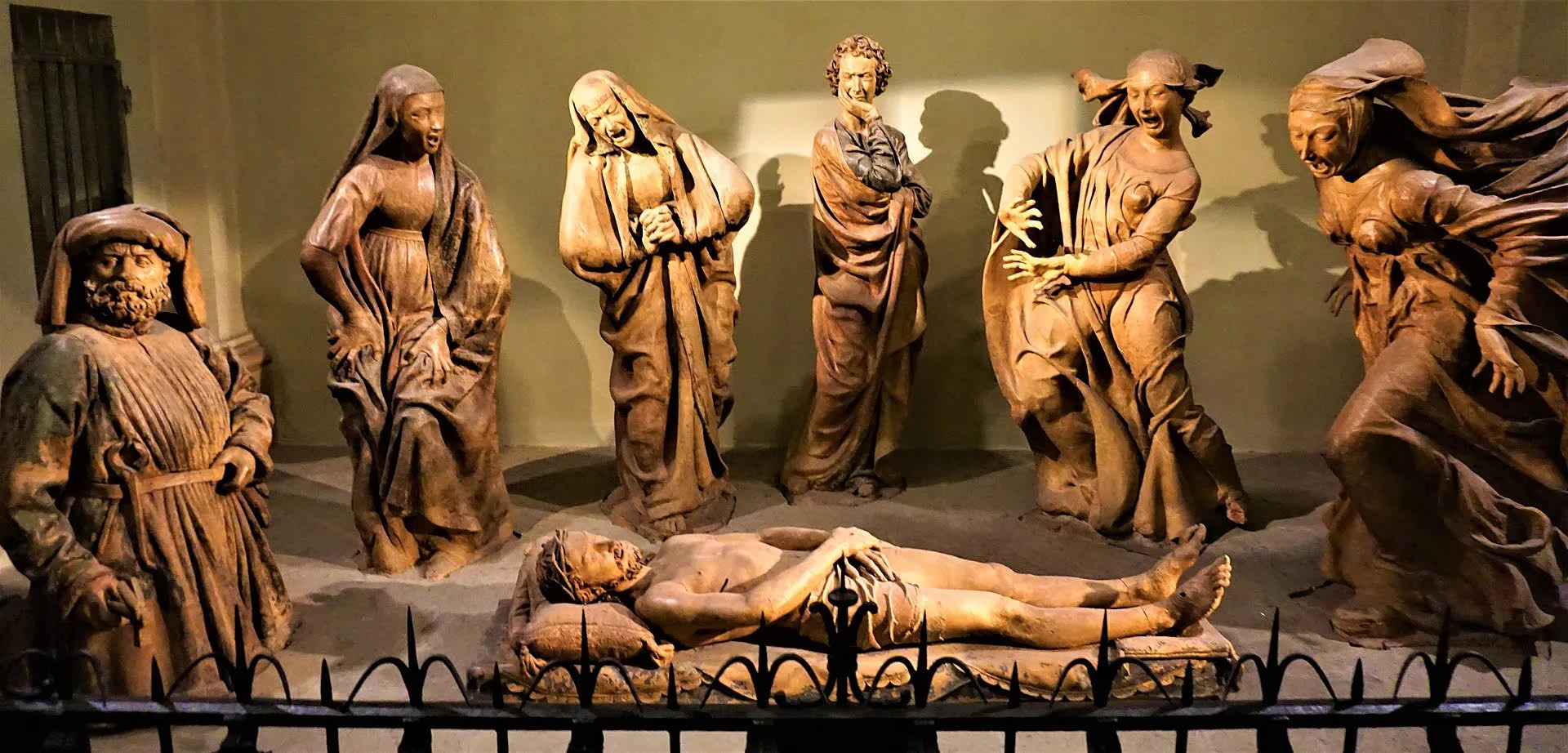
In Niccolò dell ‘Arca’s sculpture the “Lamentation of the Dead Christ,” the viewer beholds seven characters all in full posture of extremes, from the physical contortions of anguish to the rictus of death. These expressive pieces strike hard against my heart, but what connects them brings me to my knees. In Greek and Roman times it was rare for sculptors to create large group pieces from one block of marble. Even in the time of the Renaissance, if an artist was to create a scene with multiple characters, most often it was captured in a painting or bas relief.
In dell ‘Arca’s work, six three-dimensional characters are focused on a seventh lying dead before them, connected by a single theme—an invisible-made-visible lamentation before the dead Christ. The material for these images was not marble or bronze, but terracotta, considered an inferior material for an inferior art form. The hammer and chisel was not used to shape these images, but the artist’s fingers, molding and shaping each human form. “When I consider…the work of your fingers,” sang the psalmist as he praised the Creator for the mastery of creation.
This staged scene has special significance for believers during this season of the year. Yet anyone who pauses before this dramatic tableau might experience what the psalmist calls “deep calling to deep.” We identify with a universal cry of grief and bewilderment when confronted by the death of someone we love. The grief articulated by these six characters brings them to their knees or bursts from open mouths and wrenched faces. Lamentation must explode like the volcano erupting from the bowels of the earth.
Imagine what went on in the heart and mind of the artist as he delicately molded these images in a moment of great agony before the body of their dead Christ. How might we react to great loss? All six observers had varying relationship with Jesus: from his mother, Mary, to John, the beloved disciple, to the other women and Joseph of Arimathea. All had personal connections with Christ making grief so very personal. With theatrical staging this exquisite unity of human sorrow is in its rawest form. This captured moment of profound pain will, in a short time, turn into an equally profound joy and wonder. The waiting is comfortless, but joy will soon reward the faithful.